General Information
Species Name: Bromus diandrus
Also Known As: medusa's head, medusahead rye, medusahead wildrye, medusahead grass, rough medusahead
Family: Poaceae (Grass)
Growth Form: Grass
Life Span: Annual
Flowering Dates: Late Spring - Summer
Origin: Europe
Noxious: No
Why Is It Invasive?
Ripgut brome grows densely and outcompetes native grass and plant species. It highly flammable when dry and increases risk of wildfires. Long awns can injure livestock by embedding themselves into the skin and eyes.
What Does It Look Like?
General Characteristics
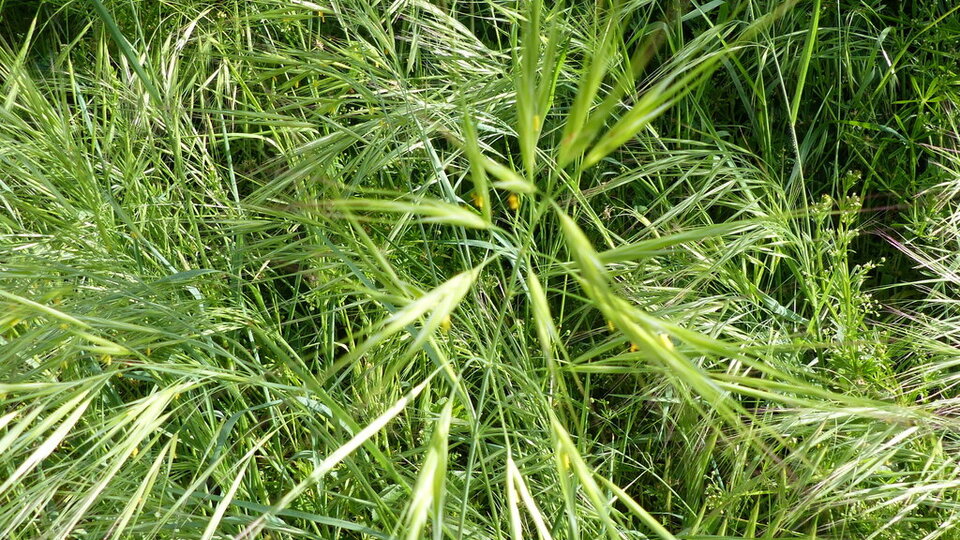
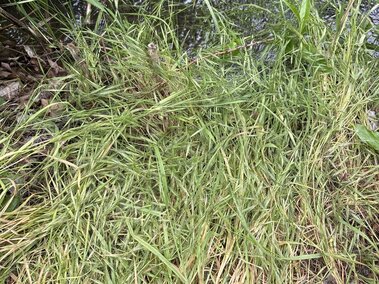
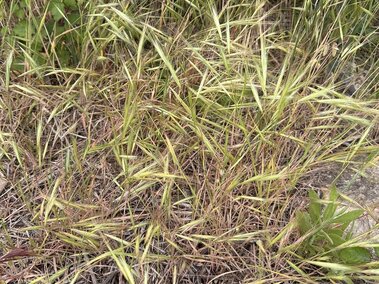
Ripgut brome has slender stems and can grow nearly 3 feet tall. It can be easily mistaken with cheatgrass but tends to be taller and have wider leaves.
Flowers
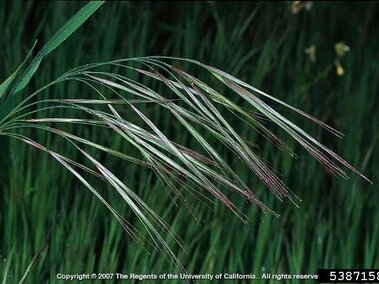
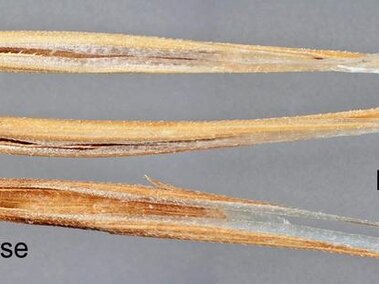
The flowerhead is open branching and resembles that of oats. It has large flowering units with long bristles that can injure livestock, pets, and wildlife. Individual flowers have tiny, rough teeth that also contribute to animal injury. Flowerheads will become reddish brown or tan as they mature.
Leaves
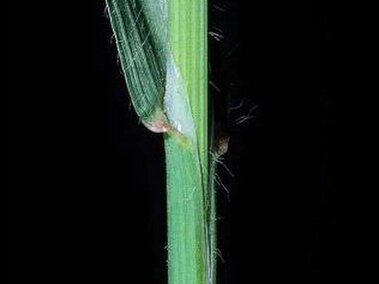
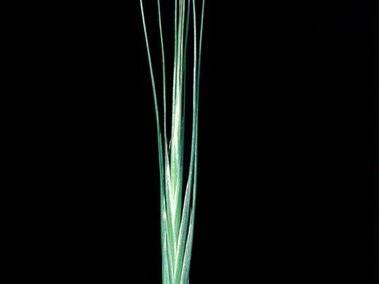
Leaves are 2-7mm wide, green, and covered in hairs.
Stems
Stems are erect and branching.
Seeds
Seeds are small and can spread long distances. One plant can produce as many as 3,000 seeds.
Photos
Where Does It Grow?
Ripgut brome can be found throughout the western and southern United States. It prefers dry, sandy soils, and can be found in open disturbed sites, including rangelands, agricultural fields, and roadsides.
How Does It Spread?
Ripgut brome is spread by seeds, which are very small and can be transported by water or soil movement, and by clinging to animals, people, and equipment.
How Do I Control It?
Mechanical
For small infestations, hand-pulling or removing by hoe before seed maturation can be effective. Mowing should not be done after seeding.
Contact your county weed control authority to determine appropriate removal methods.
Cultural
Ripgut brome seeds can attach to people, pets, and equipment. Help prevent ripgut brome spread after outdoor activities by:
REMOVE plants, animals and mud from boots, gear, pets and vehicles.
CLEAN your gear before entering and leaving the recreation site.
STAY on designated roads and trails.
PLANT non-invasive species.
Play, Clean, Go: Stop Invasive Species in Your Tracks
Chemical
Please refer to the 2025 Guide for Weed, Disease and Insect Management in Nebraska and/or contact your county weed control authority.
What Should I Do If I See It in Nebraska?
If you see Ripgut brome in Nebraska, you should report it to your county weed control authority. For guidance on what information to include in your report, check out our reporting tips.
References and More Information
Bureau of Indian Affairs - Navajo Region
California Invasive Plant Council
University of Arizona Cooperative Extension
University of California Statewide Integrated Pest Management Program