General Information
Species Name: Acroptilon repens
Also Known As: Turkestan thistle, creeping knapweed, mountain bluet, Russian cornflower, hardheads
Family: Asteraceae (Aster)
Growth Form: Forb
Life Span: Perennial
Flowering Dates: June - August
Origin: Russia and Europe
Noxious: No
Toxic: Toxic to all equine species upon ingestion. Ingestion will result in chewing disease, prohibiting the animal from be able to chew or move its mouth, ultimately resulting in starvation. Effects are irreversible.
Why Is It Invasive?
Russian knapweed aggressively invades pastures, meadows, roadsides, and fence rows. It is difficult to eliminate due to its deep root system which can extend 20 feet into the ground. Stands spread rapidly and may survive for more than 75 years. It is of poor forage quality and is toxic to equine species.
What Does It Look Like?
General Characteristics
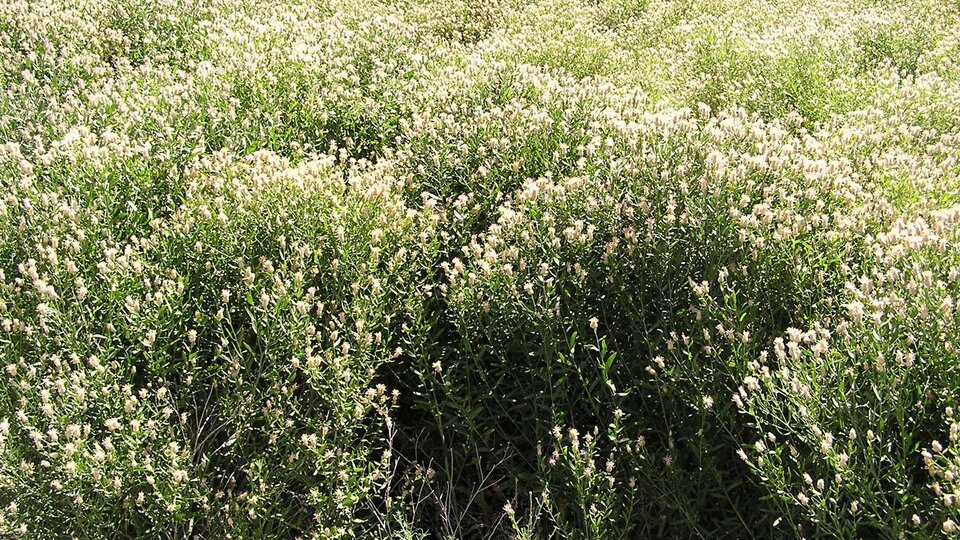
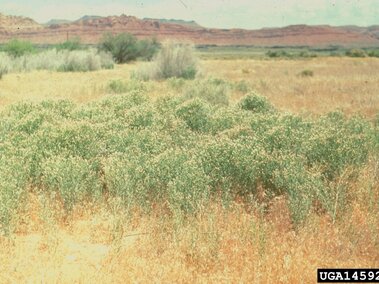
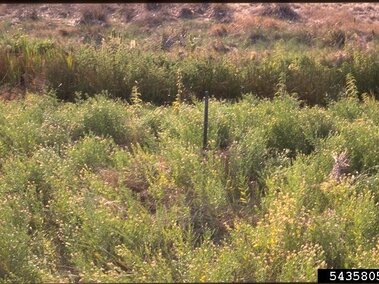
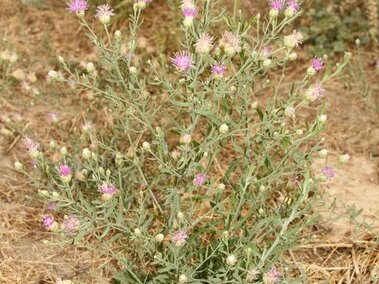
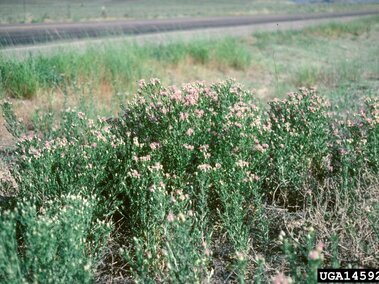
Russian knapweed is branching, bushy, and can reach 1-3 feet tall. It grows in colonies formed from its extensive root system.
Flowers
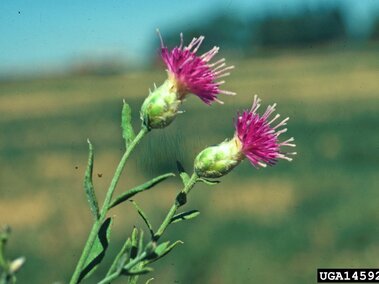
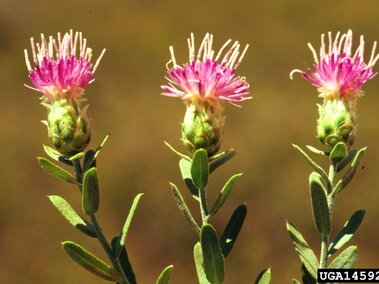
Flowers are numerous and pink to purple in color, growing solitarily at the end of branches. Petals are numerous and spiky with white pistils extending beyond tips of colored petals. The base of the flower is light brown with fringed margins.
Leaves
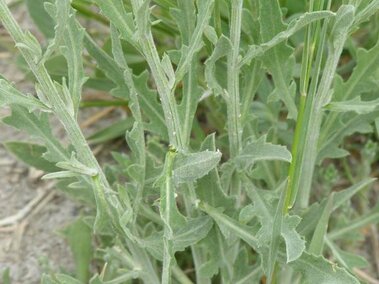
Leaves at the base of the stem are gray-green colored and lobed. Leaves decrease in size up the stem and have toothed or smooth edges.
Stems
Stems are branched upward, hairy, and rigid.
Seeds
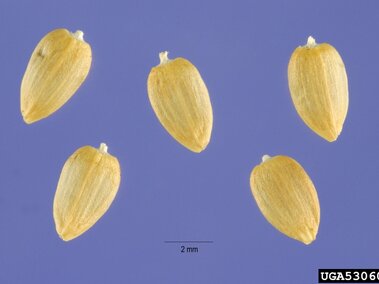
Seeds are ivory and have a feather-like plume.
Photos
Where Does It Grow?
Russian knapweed is distributed across the West Coast, Rocky Mountains, Great Plains, and Great Lakes regions. It can grow in a variety of soil types and can be found in saline soils, pastures, ditches, roadsides, and open spaces.
How Does It Spread?
Russian knapweed reproduces by seed that can be transported by either natural or human vectors. It spreads rapidly in an area due to fast growing, horizontal roots. Roots may cover up to 36 square feet in two growing season.
How Do I Control It?
A combination of control methods is recommended for Russian knapweed, as a single control method is usually not sufficient. The weed is easiest to eradicate when it is stressed, therefore an integrated management plan that places continual stress on the weed should be developed.
Mechanical
Because of its deep root system, hand pulling and digging are not feasible options for removal. Utilizing mowing in an integrated management plan may be useful but is not effective alone.
Contact your county weed control authority to determine appropriate removal methods.
Cultural
Establish and maintain a healthy resident plant community to prevent Russian knapweed infestations.
Use hay that is certified weed free by contacting the Nebraska Weed Free Forage Program.
Help prevent Russian knapweed spread after outdoor activities by:
REMOVE plants, animals and mud from boots, gear, pets and vehicles.
CLEAN your gear before entering and leaving the recreation site.
STAY on designated roads and trails.
PLANT non-invasive species.
Play, Clean, Go: Stop Invasive Species in Your Tracks
Do NOT permit equine grazing on pastures with Russian knapweed due to toxicity.
Chemical
Please refer to the 2025 Guide for Weed, Disease and Insect Management in Nebraska and/or contact your county weed control authority.
What Should I Do If I See It in Nebraska?
If you see Russian knapweed in Nebraska, you should report it to your county weed control authority. For guidance on what information to include in your report, check out our reporting tips.
References and More Information
Colorado Department of Agriculture
Colorado State University Extension
Colorado State University Guide to Poisonous Plans
National Invasive Species Information Center
Nebraska Weed Control Association
North American Invasive Species Management Association Fact Sheet
Ohio State University Extension Pesticide Safety Extension Program