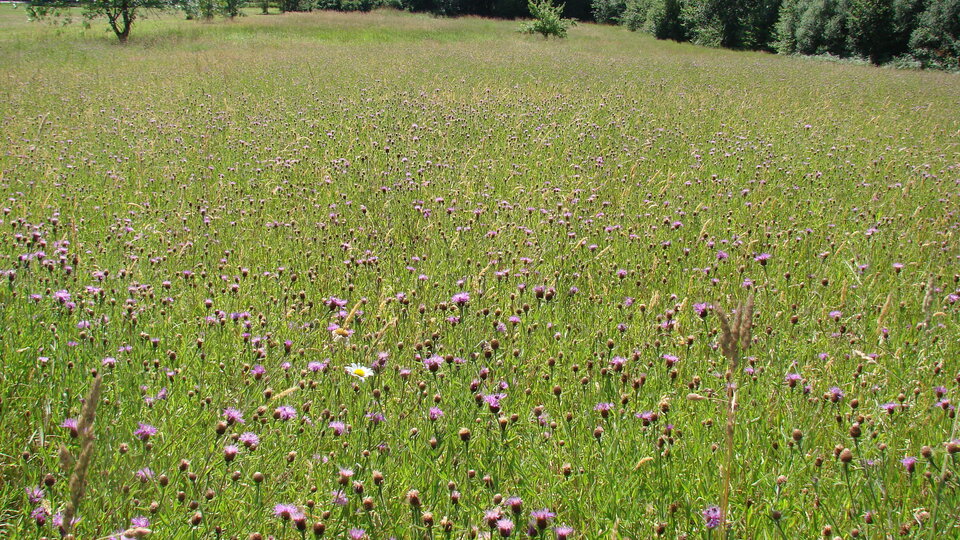
General Information
Species Name: Centaurea X moncktonii
Also Known As: hybrid knapweed
Family: Sunflower (Asteraceae)
Growth Form: Forb
Life Span: Perennial
Flowering Dates: May-July
Origin: Europe
Noxious: No
Why Is It Invasive?
Meadow knapweed can form dense stands in pastures and rangelands, outcompeting native plants and replacing desirable forage plants.
What Does It Look Like?
General Characteristics
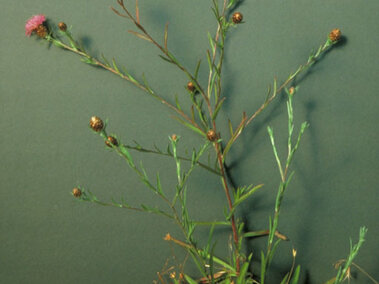
Meadow knapweed is a hybrid between brown knapweed (Centaurea jacea) and black knapweed (Centaurea nigra) and can possess physical characteristics of both plants. It can grow 1-5 feet tall and is bushy.
Flowers
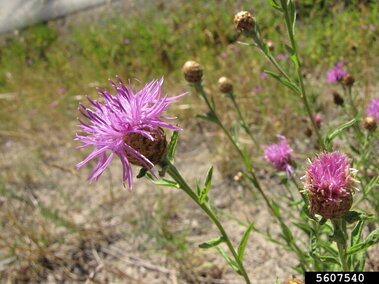
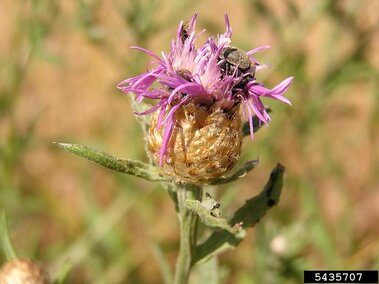
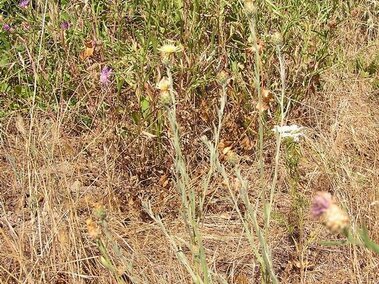
Purple-pink or white flowers grow solitarily on the end of branch tips. Petals are numerous and appear spiky. The base of the flowers are light to dark brown and have fringed margins.
Leaves
Narrow with smooth, lobed, or toothed edges and covered with short, stiff hairs. Leaves decrease in size up the stem.
Stems
Stems are brown and green, branched, and have a solitary flower at the end of each stem.
Seeds
Seeds are small, white to light brown in color, and may have a short row of hairs on one end.
Photos
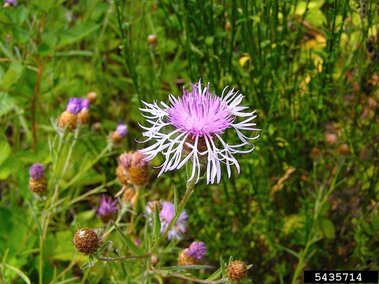
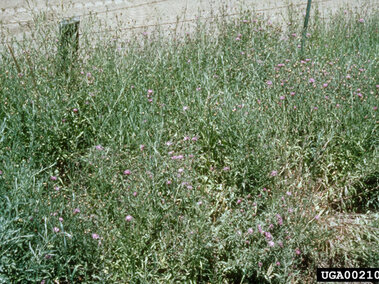
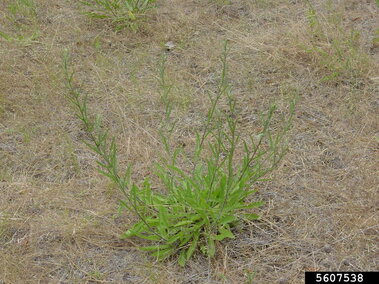
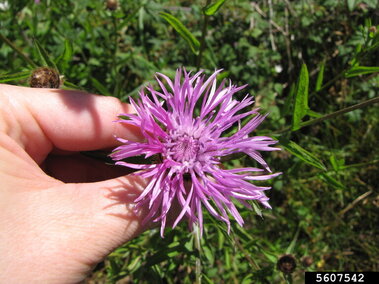
Where Does It Grow?
Meadow knapweed has been reported in some states along the East Coast and southern Canadian provinces. It can grow in pastures, meadows, roadsides, and floodplains. It prefers moderately moist sites.
How Does It Spread?
Meadow knapweed was likely introduced to the United States initially as a forage crop before understanding that it has low palatability to livestock or in contaminated soil. It spreads by seed that can be carried by natural or human vectors.
How Do I Control It?
Meadow knapweed is difficult to control or eradicate once introduced, and prevention is the best control method. Maintaining a healthy native plant or forage community can help to prevent meadow knapweed establishment.
Mechanical
Hand pulling or digging can effectively control infestations, but may be time consuming. Mechanical removal should occur when soils is moist and all roots must be removed to be effective. Carefully bag specimens to prevent seed scatter and dispersal.
Contact your county weed control authority to determine appropriate removal methods.
Cultural
Frequent cultivation of an area will reduce and eliminate meadow knapweed infestations. Do not utilize mowing as a control method, as this can spread seed.
Use hay that is certified weed free by contacting the Nebraska Weed Free Forage Program.
Help prevent meadow knapweed spread after outdoor activities by:
REMOVE plants, animals and mud from boots, gear, pets and vehicles.
CLEAN your gear before entering and leaving the recreation site.
STAY on designated roads and trails.
PLANT non-invasive species.
Play, Clean, Go: Stop Invasive Species in Your Tracks
Chemical
Please refer to the 2026 Guide for Weed, Disease and Insect Management in Nebraska and/or contact your county weed control authority.
What Should I Do If I See It in Nebraska?
If you see meadow knapweed in Nebraska, you should report it to your county weed control authority. For guidance on what information to include in your report, check out our reporting tips.
References and More Information
Colorado Department of Agriculture
Minnesota Department of Agriculture
Nebraska Weed Control Association