General Information
Species Name: Sorghum halepense
Family: Poaceae (Grass)
Growth Form: Grass
Life Span: Perennial
Flowering Dates: June-October
Origin: Mediterranean
Noxious: No
Why Is It Invasive?
Johnsongrass spreads rapidly and outcompetes native vegetation and crop plants. It can cause cyanide poisoning in livestock when ingested and cause deformities in livestock offspring.
What Does It Look Like?
General Characteristics
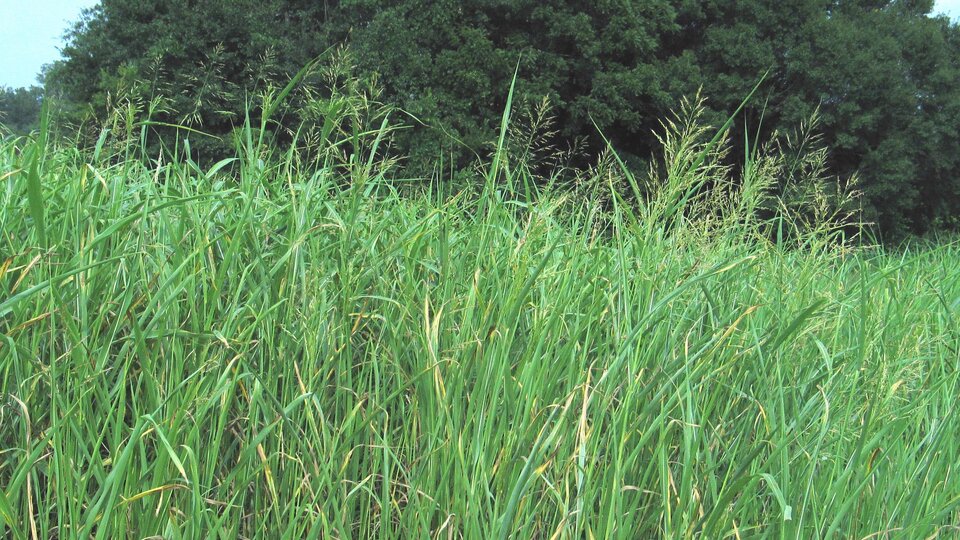
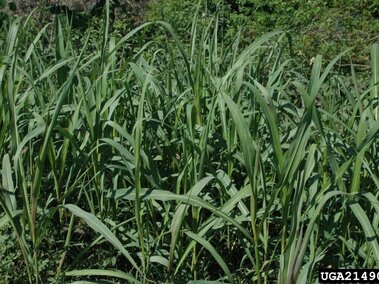
Johnsongrass can grow between 3-10 feet high and grows in dense clumps or nearly solid stands.
Flowers
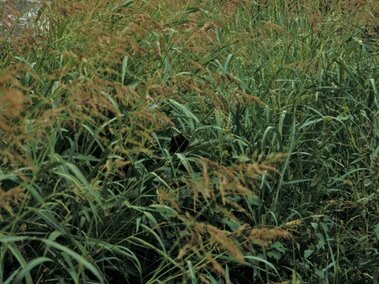
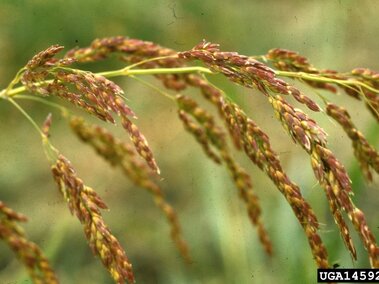
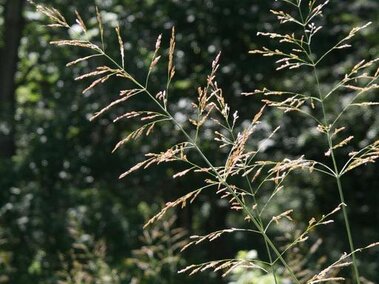
Flower clusters are large, loosely branched, purplish and hairy. They are large and can be nearly 2 feet long and 8 inches wide. Spikelets, or flowering units, occur in pairs or threes.
Leaves
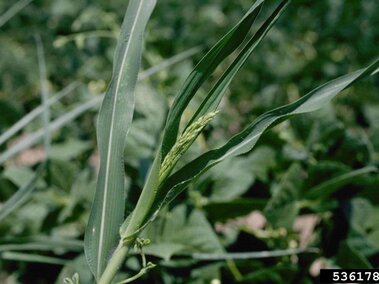
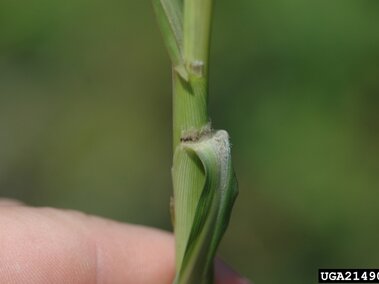
Leaf blades are flat and may or may not have hairs. They are green, slightly rolled, and have a distinct white midrib. Leaves are alternately arranged and may grow up to 2 feet long.
Stems
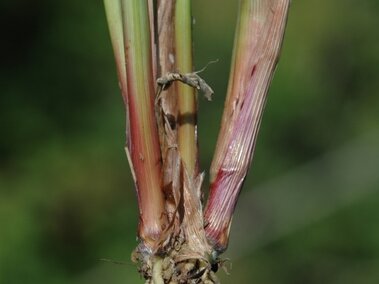
Stems are stout, hairless, and upward branching.
Seeds
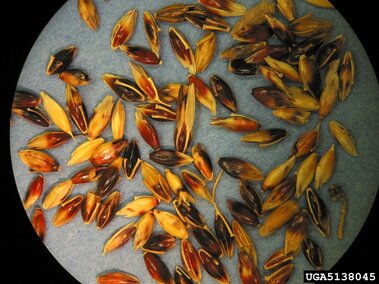
Small, usually smaller than 1 inch, reddish, and oblong to ellipsoid.
Photos
Where Does It Grow?
Johnsongrass grows in pastures, fields, prairies, and roadsides and is widespread across much of the United States. It thrives in open, disturbed areas underneath full sun, but can be successful in a wide variety of habitats. It is not tolerant of drought and is sensitive to extreme temperatures.
How Does It Spread?
Johnsongrass can spread vegetatively by underground stems or by seed which can be spread via natural or human pathways. Seeds are often transported in contaminated hay and equipment.
How Do I Control It?
Early identification and treatment of Johnsongrass infestations are key to best managing infestations.
Mechanical
Mowing can help reduce impacts of infestations, but does not generally eradicate Johnsongrass. Mechanical removal of the whole plant and rhizome system can be effective, but can be difficult in well-established populations. Additionally, exposing the rhizomes to extreme heat or cold can be effective, which can be done in fall tillage to bring rhizomes to soil surface to then be killed by winter temperatures.
Contact your county weed control authority to determine appropriate removal methods.
Cultural
Help prevent Johnsongrass spread by checking clothing, equipment, and vehicles for seeds after being in infested or suspect areas.
REMOVE plants, animals and mud from boots, gear, pets and vehicles.
CLEAN your gear before entering and leaving the recreation site.
STAY on designated roads and trails.
PLANT non-invasive species.
Play, Clean, Go: Stop Invasive Species in Your Tracks
Contact your county weed control authority before utilizing grazing as a management method, as Johnsongrass can cause cyanide poisoning in livestock under certain conditions.
Chemical
Please refer to the 2026 Guide for Weed, Disease and Insect Management in Nebraska and/or contact your county weed control authority.
What Should I Do If I See It in Nebraska?
If you see Johnsongrass in Nebraska, you should report it to your county weed control authority. For guidance on what information to include in your report, check out our reporting tips.
References and More Information
Minnesota Department of Agriculture
Mississippi State University Extension
Missouri Department of Conservation
University of California Statewide Integrated Pest Management Program