General Information
Species Name: Hyoscyamus niger
Also Known As: Black henbane, hog's bean, stinking nightshade, Devil's eye
Family: Solanaceae (Nightshade)
Growth Form: Forb
Life Span: Annual or Biennial
Flowering Dates: May-September
Origin: Europe and northern Africa
Noxious: No
Toxic: Highly toxic to livestock and humans if ingested
Why Is It Invasive?
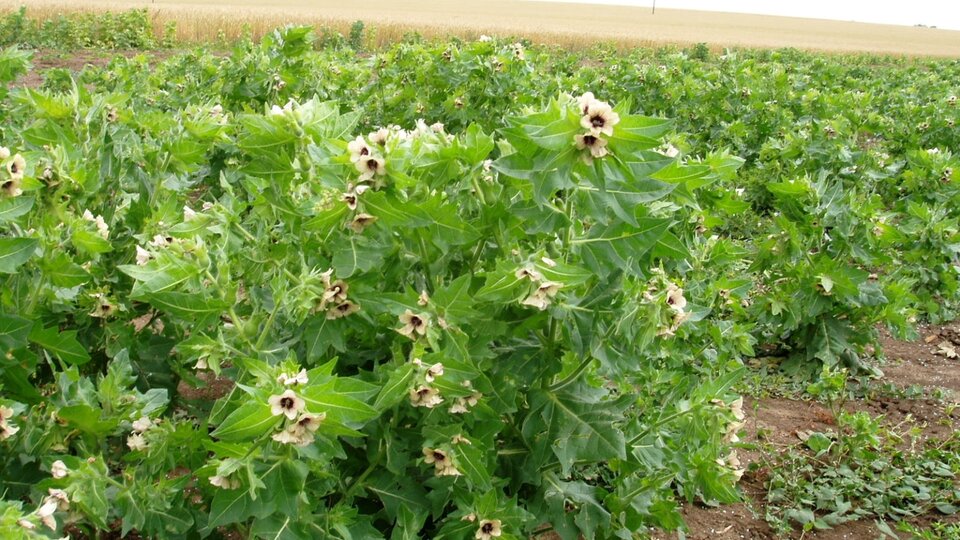
Henbane invades pastures, roadsides, and meadows, forming dense stands and outcompeting native vegetation. Henbane is highly toxic and potentially fatal to livestock and humans when ingested and toxic upon contact with the skin.
What Does It Look Like?
General Characteristics
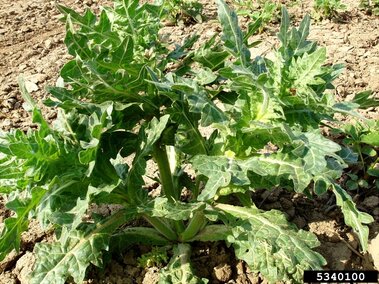
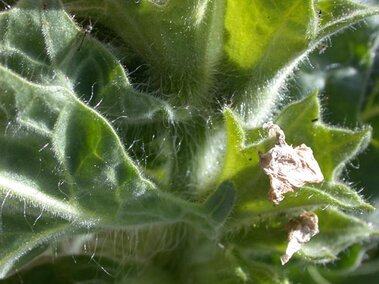
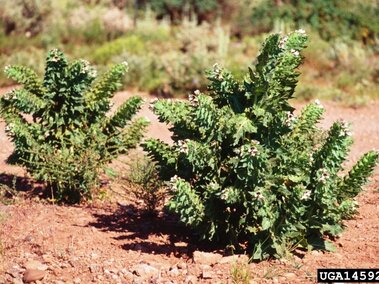
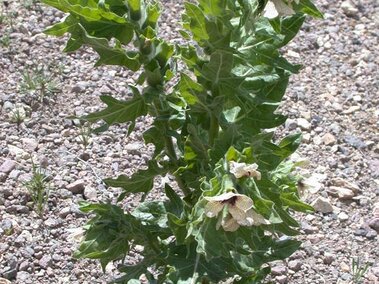
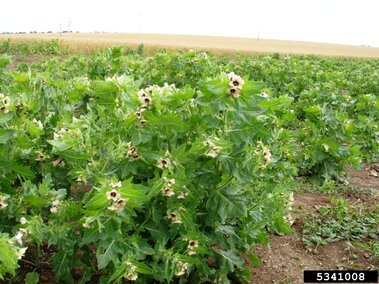
Henbane is an annual forb that can grow 1-6 feet tall. Small hairs cover the plant, giving it a "sticky" texture. It emits a foul odor, especially when crushed.
Flowers
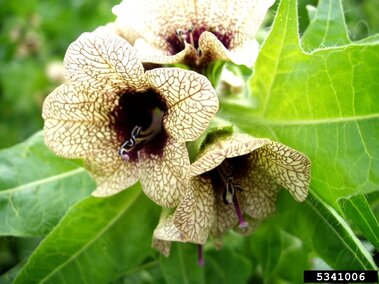
Flowers are funnel shaped and have 5 lobes. They are yellow with a deep purple center and purple veins.
Leaves
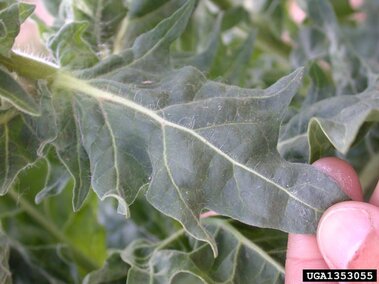
Leaves are large (6-8 inches long), alternate, and have coarsely toothed margins. They are greenish-gray in color with a white mid-vein.
Stems
Stems are gray-green, erect, thick, coarse, and widely branched. They emit a foul odor when crushed and are covered with sticky, greasy hairs.
Seeds
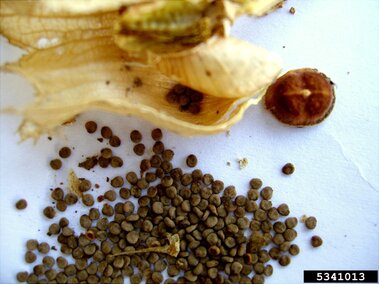
Black, pitted seeds are contained in a pineapple-shaped fruit that appear after flowering.
Photos
Where Does It Grow?
Henbane will grow in a variety of environmental conditions, succeeding in most soil types except for water-logged soils. It prefers sandy or well-drained loam soils and is commonly found in disturbed sites. It can grow in rangelands and pastures, roadsides, riparian areas and waste areas.
How Does It Spread?
Henbane was initially introduced to the United States as an ornamental and medicinal plant in the 1600s. Since then, it has escaped cultivation and spread throughout the Northeast, Midwest, and Rocky Mountains. Henbane is spread via seed dispersal and seeds can remain viable in soil for up to 5 years. Human seed dispersal may occur through movement of contaminated soil or seeds attaching to clothes, equipment, or pets.
How Do I Control It?
A healthy plant community with good vegetative cover significantly reduces the chance of henbane infestation. Upon establishment, management techniques should include preventing seed production and monitoring for populations over several years due to seed viability.
Mechanical
Because henbane can be toxic upon contact with skin, mechanical removal via pulling or digging can be difficult and risky.
Contact your county weed control authority to determine appropriate removal methods.
Cultural
Establish and maintain a healthy resident plant community to prevent henbane infestations.
Help prevent henbane spread by checking clothing, equipment, and vehicles for seeds after being in infested areas.
REMOVE plants, animals and mud from boots, gear, pets and vehicles.
CLEAN your gear before entering and leaving the recreation site.
STAY on designated roads and trails.
PLANT non-invasive species.
Play, Clean, Go: Stop Invasive Species in Your Tracks
Do NOT attempt to use grazing as a management method due to potentially lethal toxicity to livestock.
Chemical
Please refer to the 2026 Guide for Weed, Disease and Insect Management in Nebraska and/or contact your county weed control authority.
What Should I Do If I See It in Nebraska?
If you see henbane in Nebraska, you should report it to your county weed control authority. For guidance on what information to include in your report, check out our reporting tips.
References and More Information
Montana State University Extension