General Information
Species Name: Ventenata dubia
Also Known As: Wiregrass, North Africa grass
Family: Poaceae (Grass)
Growth Form: Grass
Life Span: Annual
Flowering Dates: May-June
Origin: Western Asia, southern Europe, northern Africa
Noxious: No
Why Is It Invasive?
Ventenata outcompetes desirable forage, reducing rangeland opportunity and decreasing hay-yield in managed grass-hay systems. It's high silica content makes it unpalatable to livestock.
What Does It Look Like?
General Characteristics
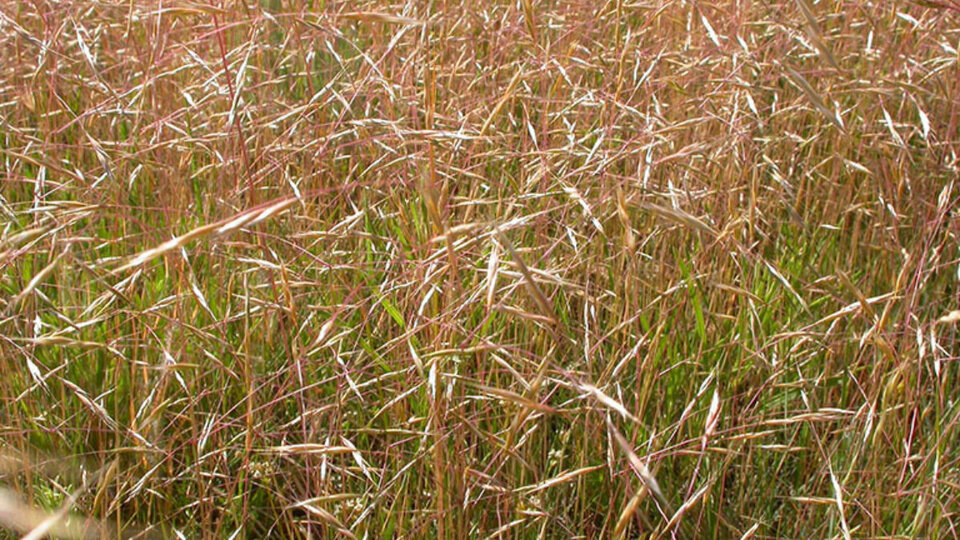
Ventenata is a winter annual grass that can grow 4-18 inches (10-46cm) tall. It can be easily identified in the early summer by by its purple-black or reddish nodes.
Flowers
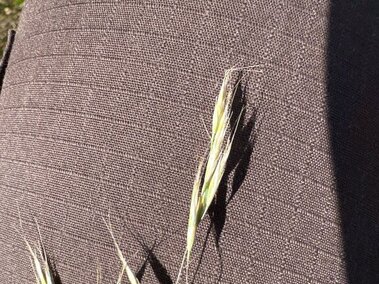
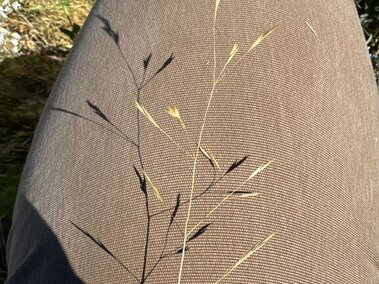
Flowers are slenderly bunched on sub-branches, with 1-5 spikelets at the tips. Flowers appear silvery green but mature to a yellowish-tan color.
Leaves
Leaves mostly occur on the lower half of the stem with open leaf sheaths. Leaves are slender, in-rolled, ascending, smooth and hairless on the top but rough on the bottom.
Stems
Stems are slim, erect, and are green to light tan in color. Although stems appear smooth, they have microscopic hairs. Stems have 3-4 purple-black exposed nodes, a defining characteristic of Ventenata.
Seeds
Ventenata seeds are small and cylindrical, typically about 3mm long. They are smooth and have no hairs.
Photos
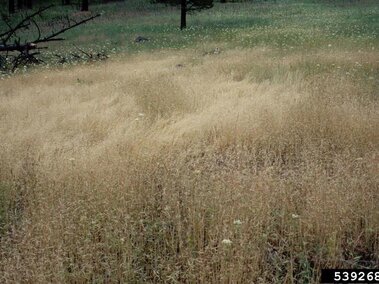
Credit: Ryan Magera, Bugwood.org
Credit: Ryan Magera, Bugwood.org
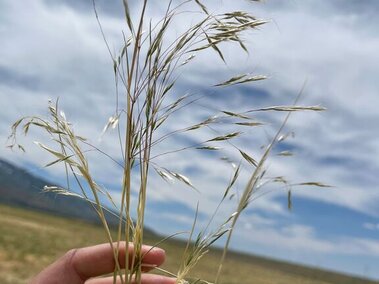
Credit: Morgan Etnyre, Bugwood.org
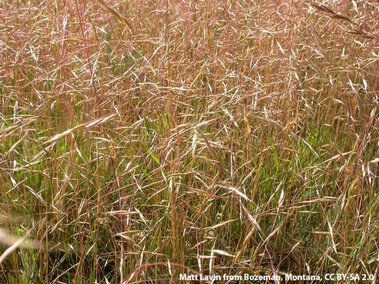
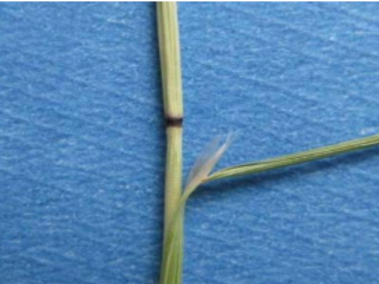
Where Does It Grow?
Ventenata is present along the West Coast, Idaho, Nevada, Utah, Wyoming and Wisconsin, as well as multiple southern Canadian provinces. Ventenata prefers sites that with high amounts of water in the early spring but dry by late spring but can grow in a variety of dry and open habitats. It is commonly found on south-facing hillsides with shallow, rocky clay or clay-loam soils.
How Does It Spread?
Ventenata was first reported in the United States in 1952. It is primarily spread as a contaminant of Kentucky bluegrasses, hay, and annual crops. It can also be found on roadsides and is moved along transportation corridors. It's long awns can also increase human and animal dispersal vectors.
How Do I Control It?
Few control methods are known for Ventenata, especially in rangeland and pasture settings. However, three or four years of aggressive management, following by vigilant monitoring, may eliminate or significantly reduce infestations.
Mechanical
Do not mow during heading. Mowing multiple times throughout growing season may be successful.
Contact your county weed control authority to determine appropriate removal methods.
Cultural
Avoid moving livestock from Ventenata infested pastures or rangeland to areas void of infestation. Prevent seed spread by avoiding feeding contaminated hay that may come from high-risk areas. Utilize hay that is "certified weed free".
Nebraska Weed Free Forage Program
Help prevent seed dispersal after recreational activities or driving through heavily infested areas by:
REMOVE plants, animals and mud from boots, gear, pets and vehicles.
CLEAN your gear before entering and leaving the recreation site.
STAY on designated roads and trails.
PLANT non-invasive species.
Play, Clean, Go: Stop Invasive Species in Your Tracks
Chemical
Please refer to the 2025 Guide for Weed, Disease and Insect Management in Nebraska and/or contact your county weed control authority.
What Should I Do If I See It in Nebraska?
If you see Ventenata in Nebraska, you should report it to your county weed control authority. For guidance on what information to include in your report, check out our reporting tips.
References and More Information
Nebraska Weed Control Association Nebraska Weed Free Forage Certification Program
South Dakota State University Extension
United States Department of Agriculture
USDA Natural Resources Conservation Service
University of Nebraska-Lincoln Institute of Agriculture and Natural Resources Cropwatch