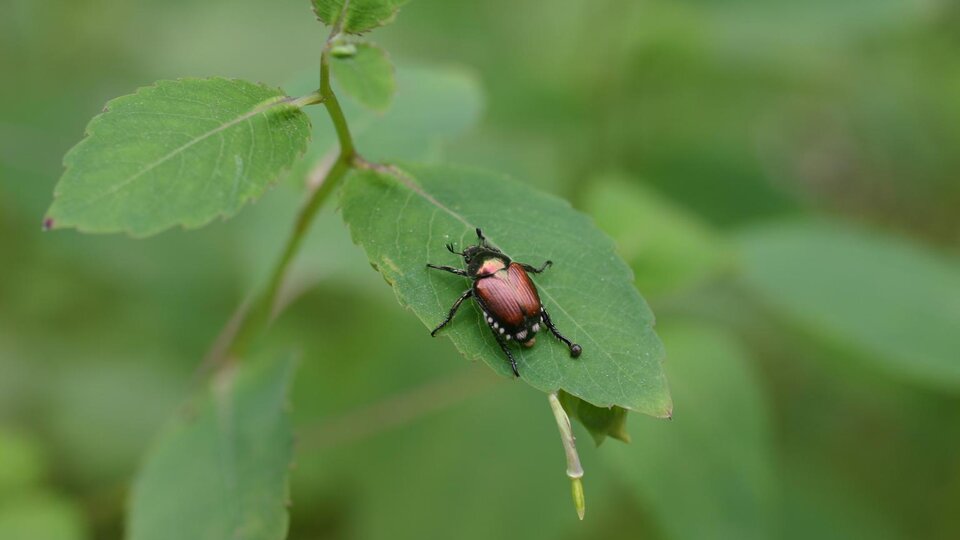
General Information
Species Name: Popillia japonica
Family: Scarabaeidae (Scarab beetles)
Life Cycle: Eggs > Larva (3 molting phases) > Adult
Activity: Larvae move towards soil surface in the spring to begin feeding. Adults emerge mid-summer and lay eggs in late summer. Eggs will hatch into larva which will dig deep into the soil and overwinter.
Origin: Japan
Host Species: More than 300 agricultural, ornamental, grass, and turf species
Why Is It Invasive?
Japanese beetles are considered one of the most devastating pests of urban landscape plants in the United States and effect over 300 species of grasses and plants. Adult beetles travel in swarms that feed on plants from the top down, resulting in severe damage that can lead to death of the plant. Underground, Japanese beetle larva gnaw on roots, causing severe damage and plant death. Japanese beetles can have a negative economic impact on agricultural landowners and damage gardens in urban areas.
What Does It Look Like?
Adult Beetle
Adults are about 1/2 inch long and have metallic green bodies with copper colored wings. White tufts project from under the sings on each side of the body.
Larva
Larvae go through 3 molting phases. They are C-shaped and cream colored with a tan head. The legs are easily visible and they grow to about 1 inch in length.
Eggs
Eggs are small and buried under soil.
Photos
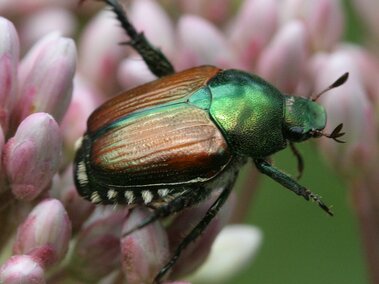
Credit: David Cappaert, Bugwood.org
Adult
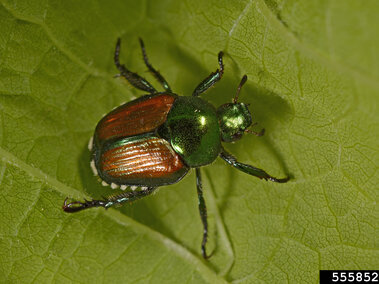
Credit: Joseph Berger, Bugwood.org
Adult
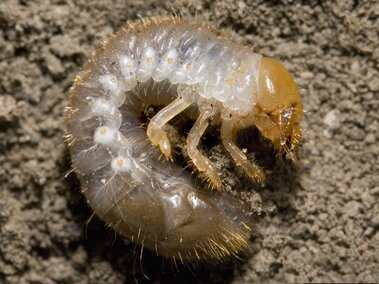
Credit: David Cappaert, Bugwood.org
Larva
What Are the Signs of Infestation?
Leaf Damage
Skeletonization will occur in which tissue between leaf veins has been consumed, leaving the leaf with a skeleton-like appearance. Irregular holes and notches may also be present in leaves.
Fruit and Flower Damage
Damage to fruits may occur from adult beetles feeding on them. Flowers may become ragged less visually aesthetic.
Root Damage
Root damaged cause by feeding larvae may result in patched of dead or dying grass. The soil may have a spongy texture and the grass may be easily pulled from the ground.
Photos
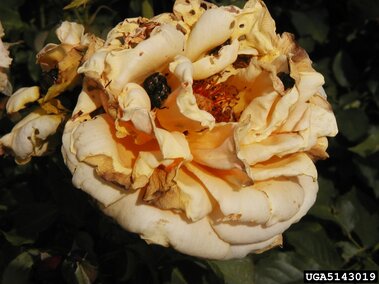
Credit: Dow Gardens , Dow Gardens, Bugwood.org
Flower damaged by Japanese beetle
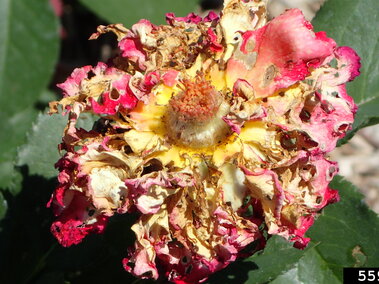
Credit: Whitney Cranshaw, Colorado State University, Bugwood.org
Flower damaged by Japanese beetle
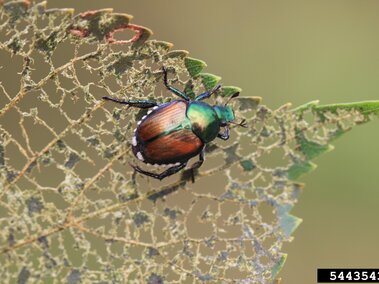
Credit: Steven Katovich, Bugwood.org
Leaf skeletonization
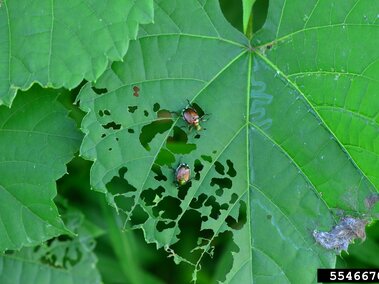
Credit: David L. Clement, University of Maryland, Bugwood.org
Leaf skeletonization
Where Do They Live?
Japanese beetles can be successful wherever their host plants are present. The United States, home to many of these species, provides a favorable environment for Japanese beetle to succeed. They can be found across the Eastern United States and into the Midwest.
How Do They Spread?
Japanese beetles were initially identified in the United States in 1916 in New Jersey. It is suspected that they were introduced in contaminated soil of ornamental plants. Since then, they have naturally expanded their range and have been transported in infested soil, sod, and plants.
How Do I Control Them?
Mechanical
For small infestations, manually remove adult beetles from plants and drop them in a container of soapy water.
Cultural
Maintain healthy plants by ensuring proper watering, fertilization, and avoid overcrowding and overwatering. Inspect soils and plants for signs of Japanese beetle infestation before transporting them.
Insecticide
Please refer to the 2026 Guide for Weed, Disease and Insect Management in Nebraska.
References and More Information
Colorado Department of Agriculture
Colorado State University Extension
National Invasive Species Information Center
USDA Animal and Plant Health Inspection Service
University of Kentucky Department of Entomology
University of Minnesota Extension
University of Wisconsin - Madison Division of Horticulture
Washington State Department of Agriculture