General Information
Species Name: Tomicus piniperda
Also Known As: pine shoot beetle, PSB, Eurasian pine shoot beetle
Family: Buprestidae (Jewel)
Life Cycle: Complete (egg > larvae > pupae > adult) Pine shoot beetle completes its life cycle within three months
Activity: Adult pine shoot beetles emerge from overwintering when temperatures reach 54F
Origin: Eurasia
Host Species: Pine trees
Why Is It Invasive?
PSBs live in and feed on pine tree species, stressing and potentially killing trees. Adult PSBs feed on tree shoots, stunting tree growth, and stress trees by breeding under the bark and at the base of trees. Larval PSBs feed on the tissues between the bark and wood, which is responsible for increasing thickness of stems and roots, further stunting tree growth. Decreases in pine trees can alter an area's ecosystem by reducing habitat and food resources. Additionally, decreases in pine trees can negatively effect tree farms and logging operations as well as decrease property values and public enjoyment.
What Does It Look Like?
Adult Beetle
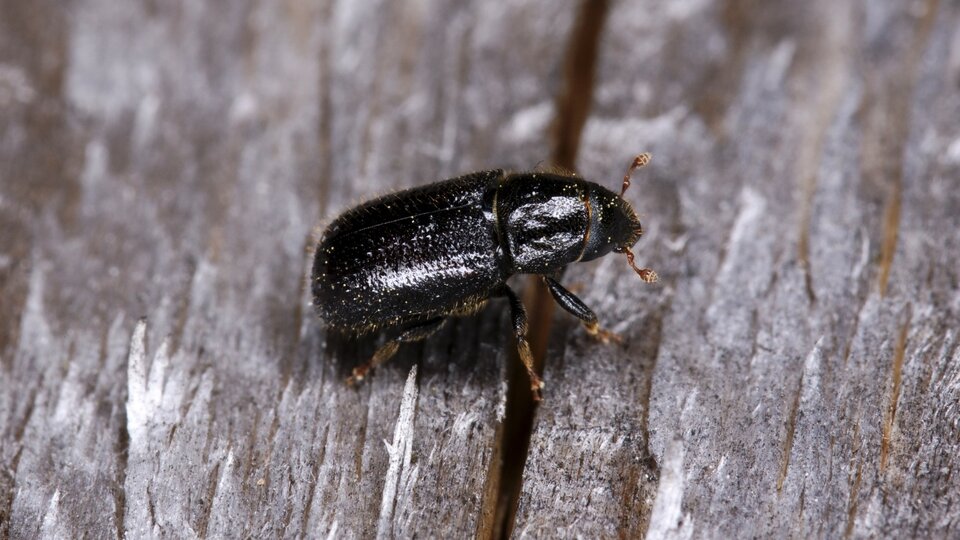
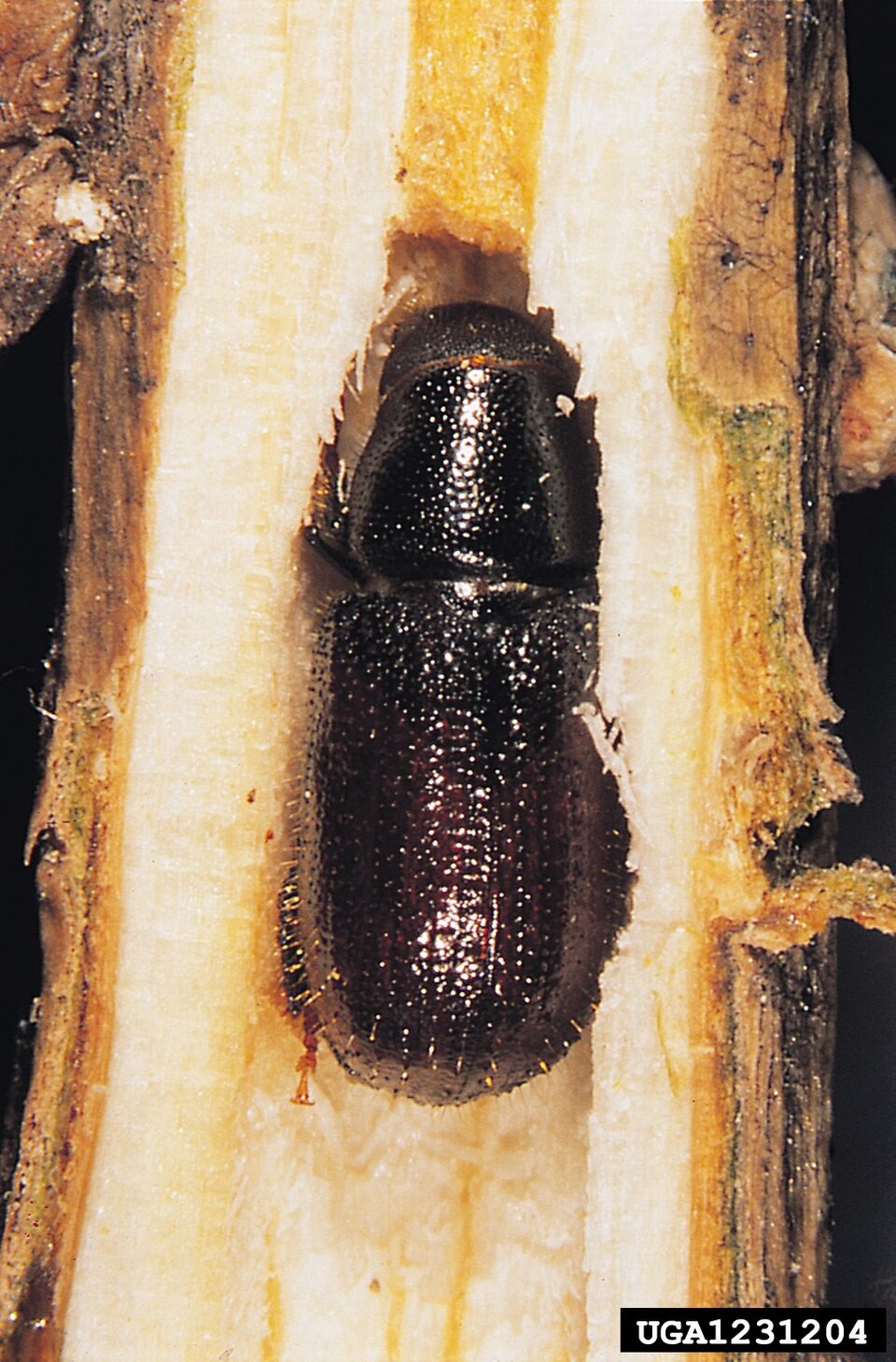
Adult PSBs reach about 1/4 inch in length and are cylindrical. They are shiny brown to black and become darker as they mature.
Larval Stage
Larva reach up to 5mm long and have no legs. They are white with brown heads.
Pupae
Pupae are often not seen, as they pupate underneath tree bark and do not emerge until they are adults.
Eggs
Eggs are pearly white, smooth, oblong, and very small.
Photos
Credit: Gyorgy Csoka, Hungary Forest Research Institute, Bugwood.org
Adult pine shoot beetle
Credit: Stanislaw Kinelski, Bugwood.org
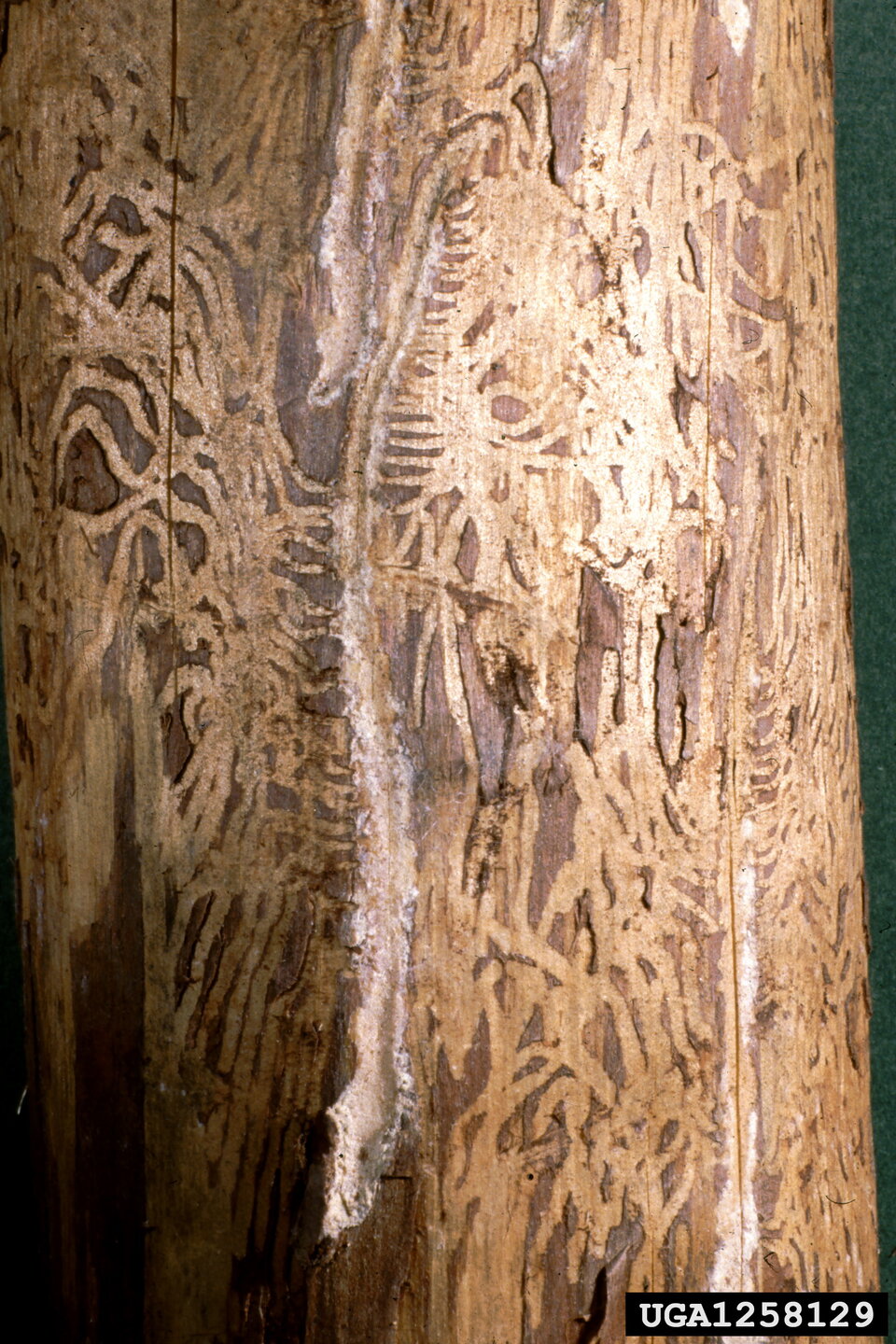
Pine shoot beetle larvae galleries
What Are the Signs of Infestation?
Resin Secretion
Tree resin may ooze from larval points of entry.
Galleries
In dead or dying pines, you may find larval galleries underneath the bark.
Exit Holes
As adults exit trees, they leave small 2mm holes at their exit points.
Shoot Damage
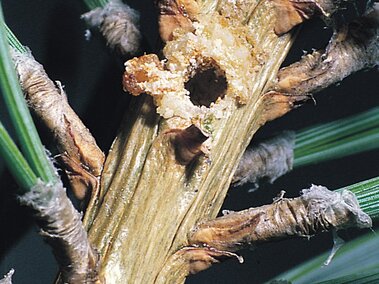
Tree shoots may appear reddish-yellow and dead shoots may be found on the ground. Shoots may have round holes where adults have fed on them.
Photos
Credit: Gyorgy Csoka, Hungary Forest Research Institute, Bugwood.org
Pine shoot with adult PSB damage
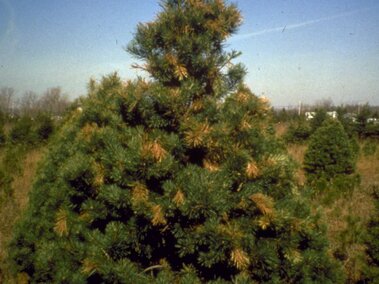
Credit: Robert A. Haack, USDA Forest Service, Bugwood.org
Pine tree with dead/dying shoots from PSB damage
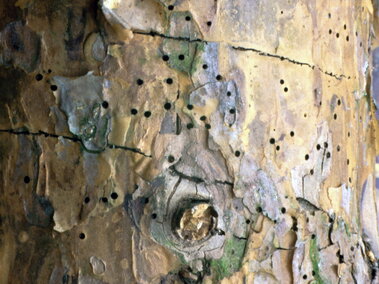
Credit: Stanislaw Kinelski, Bugwood.org
Exit holes of emerging adult PSBs
Where Do They Live?
PSB can be found in the Northeastern part of the United States and into Canada. They are most often found in areas where pine plantations exist and tend to attack weak pine trees but will also attack healthy ones.
How Do They Spread?
Natural adult spread is very limited, with most adults traveling less than ½ mile annually. PSB spread primarily results from human movement of infested trees and pine products.
What Do I Do if I Find Them?
If you find an individual or symptoms of a pine shoot beetle, report it to the Nebraska Invasive Species Council. Check out our reporting tips for more information on what to include in your report.
How Do I Control Them?
Mechanical
Mechanical management of PSBs is considered one of the most effective control methods. Reduce PSB habitat by felling week and susceptible pine trees and chip and burn discarded suitable breeding materials. This reduces the PSB population by suppressing emergence of new beetles.
Cultural
Do not move or transport firewood long distances and burn it where you buy it. Ensure that pine trees show no signs of infestation when moving them long distances for ornamental or other purposes.
Chemical
Please refer to the 2026 Guide for Weed, Disease and Insect Management in Nebraska, contact your county weed control authority, or find a certified Nebraska arborist.
References and More Information
Maine Department of Agriculture, Conservation, and Forestry
Massachusetts Introduced Pests Outreach Project
Minnesota Department of Agriculture
National Invasive Species Information Center
New Jersey Department of Agriculture
Texas Invasive Species Institute