General Information
Species Name: Prunus americana
Also Known As: American plum, sandhill plum, Osage plum, river plum, sand cherry, thorn plum, wild yellow plum, red plum, August plum, goose plum, hog plum, sloe
Family: Rosaceae (Rose)
Growth Form: Shrub
Life Span: Perennial
Flowering Dates: April-May
Origin: Native
Noxious: No
Why Is It Problematic?
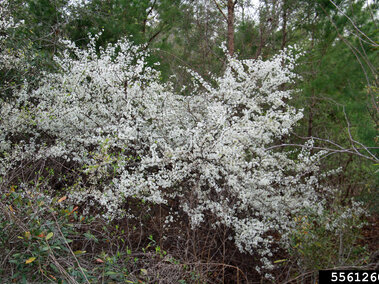
Wild plum can succeed in many different environmental and soil conditions and has a suckering root system, allowing it to spread quickly within an area. It is fast-growing and forms dense thickets when unmanaged that can restrict the growth of native species and desirable forage. Thorny branches can be hazardous for livestock, pets, and people.
What Does It Look Like?
General Characteristics
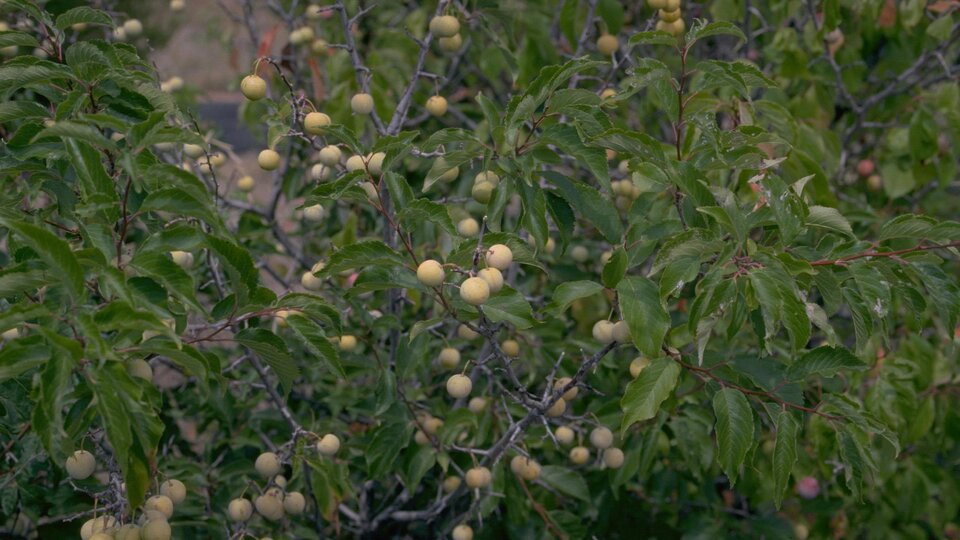
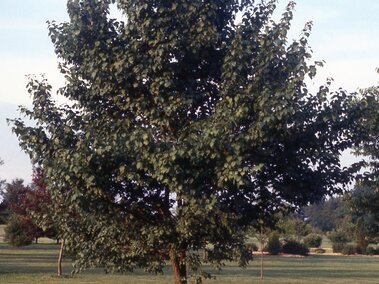
Shrub or small tree that can have dense or spreading branches known for its edible fruit and beautiful floral blooms.
Flowers
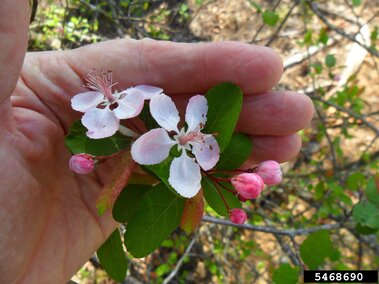
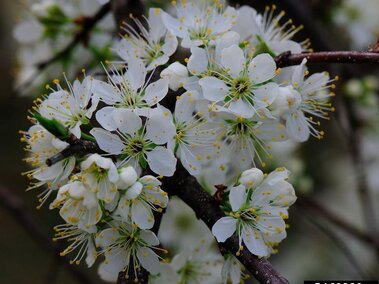
Flowers are small, white, and have a pleasant floral scent. They have 5 petals which are rounded at the tip and narrow at the base. Flowers have many stamens and grow in clusters of 2-5.
Leaves
Leaves are alternately arranged about the stem and oval with a pointed tip. They have sharply toothed margins, dark green topsides and paler green undersides.
Bark and Stems
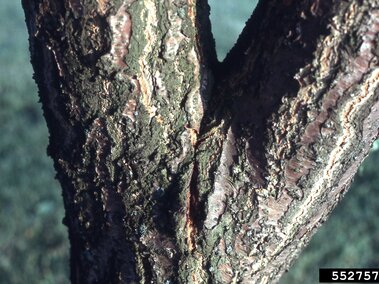
Bark is dark brown to reddish and breaks into long, thin, plates. Twigs are slender, smooth, and range in color from green to orange to reddish-brown. Branches have spurs or thorns and have circular, raised pores.
Fruit
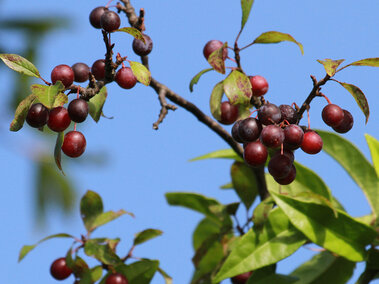
Fruits grow in clusters of 1-5 and are approximately 1 inch long. They are round, red or yellow, and have pale dots. Fruit skin is tough and flesh is yellow and juicy with a favorable, sweet, taste.
Photos
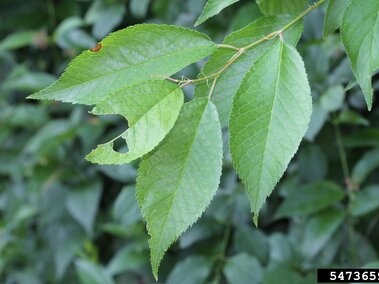
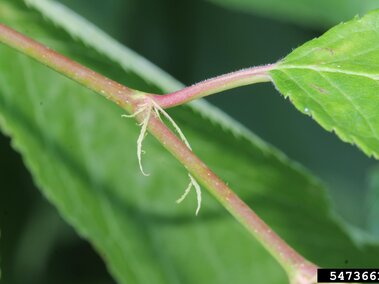
Credit: David Stephens, Bugwood.org
Credit: James R. Holland, Bugwood.org
Where Does It Grow?
Wild plum occurs in prairies, woodlands, pastures, and along roadsides. It grows best in moist soils but is moderately drought tolerant. It can successfully establish in full sun or partial shade and various soil types. Wild plum can be found across the United States.
How Does It Spread?
Wild plum spreads via seed and root suckering. Seeds can be spread by wildlife and other natural vectors and by people. Root suckering allows wild plum to grow an entirely new plant from another's underground root system, permitting it to spread quickly and form dense thickets.
How Do I Control It?
Mechanical
Digging and hand removal of small infestations can help control wild plum. Ensure that the root system is removed and wear protective clothing to avoid injury from thorns.
Contact your county weed control authority to determine appropriate removal methods.
Cultural
One way that invasive plant seeds and fragments can spread is in soil. Sometimes plants are planted purposefully. You can prevent the spread of invasive plants.
PlayCleanGo: Stop Invasive Species in Your Tracks
REMOVE plants, animals and mud from boots, gear, pets and vehicles.
CLEAN your gear before entering and leaving the recreation site.
STAY on designated roads and trails.
PLANT non-invasive species.
Herbicide
Please refer to the 2026 Guide for Weed, Disease and Insect Management in Nebraska and/or contact your county weed control authority.
References and More Information
Iowa State University Extension and Outreach
North Carolina State University Extension Gardener
Minnesota Board of Water and Soil Resources
Missouri Department of Conservation
Nebraska Weed Control Association
USDA NRCS National Plant Data Center & Missouri State Office Plant Guide
USDA NRCS Plant Materials Program Plant Guide