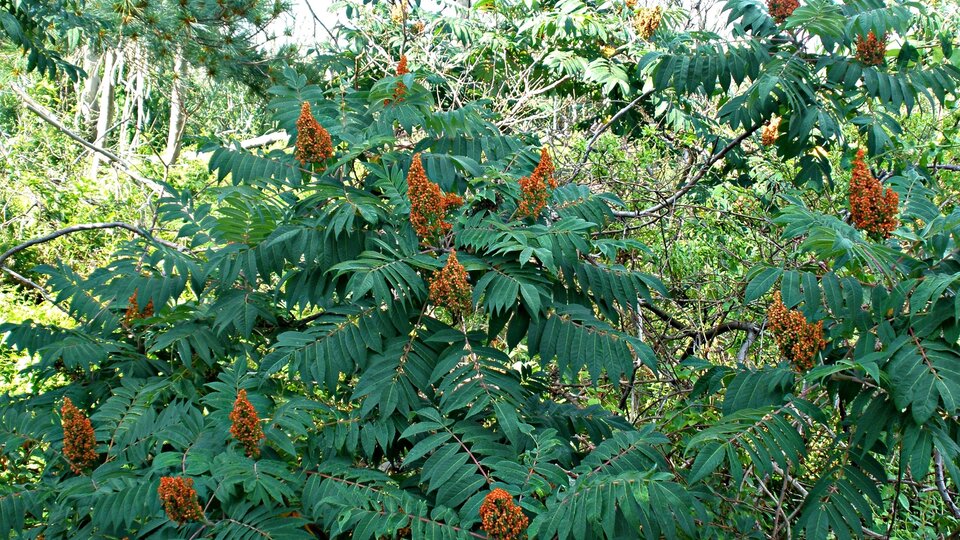
Credit: Ansel Oommen, Bugwood.org
General Information
Species Name: Rhus glabra
Family: Anacardiaceae (Cashew)
Growth Form: Shrub
Life Span: Perennial
Flowering Dates: May-July
Origin: Native
Noxious: No
Why Is It Problematic?
Smooth sumac expands quickly and forms dense, thick colonies. Smooth sumac is considered a pioneer species and is one of the first species to establish in areas of disturbance. It spreads by both seed and underground root systems, making it difficult to manage and eradicate once established. It is adapted to many different soil and environmental conditions, making it competitive in a variety of landscapes.
What Does It Look Like?
General Characteristics
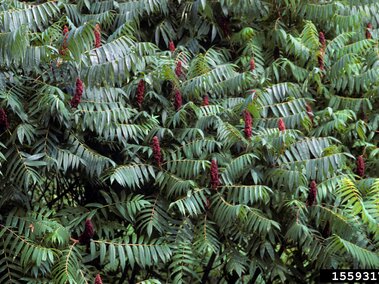
Gangly shrub that grows in large colonies.
Flowers
Flowers are yellowish green and have 5 petals. Flowers grow in cone-like clusters.
Leaves
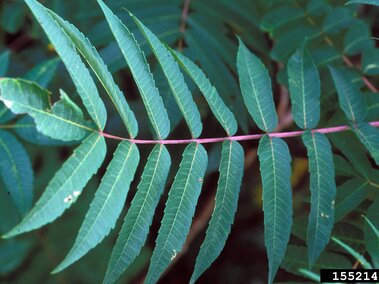
Leaves are alternately arranged about the stem and comprised of 11-29 leaflets. Leaflets are narrowly ovate and have coarsely toothed margins. The topside of the leaflets are dark green whereas undersides are whitish. Leaves turn bright red in the fall and are typically one of the first trees to change colors.
Stems
Upright, rigid, and not branched or few branching. Stems are reddish brown to purple when young and mature into grayish brown. Stems are multitudinous and form dense thickets.
Fruit
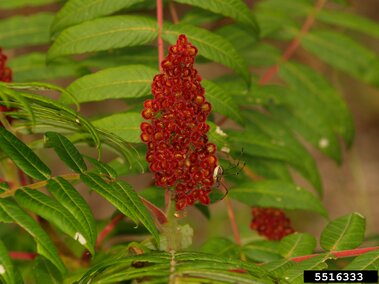
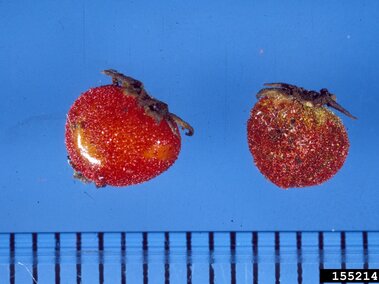
Fruits are dark, red, round and have hairs. Each contains 1 seed.
Photos
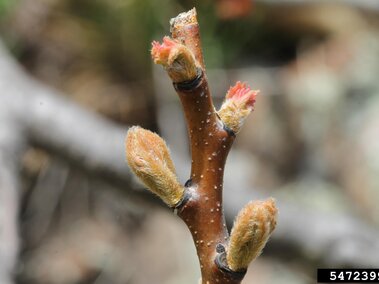
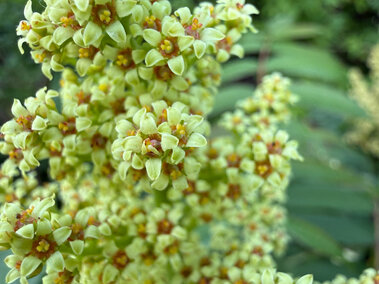
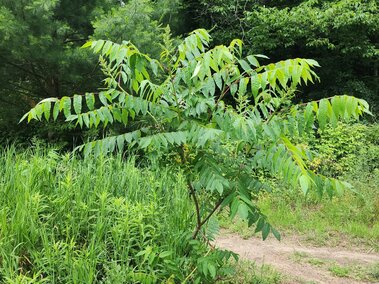
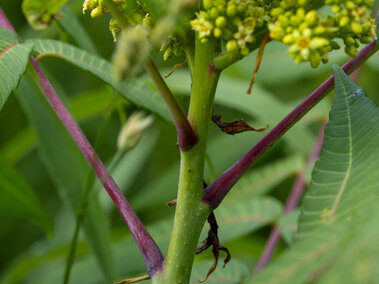
Where Does It Grow?
Smooth sumac is widespread across North America and thrives along stream and lake edges. It can be found growing on roadsides, in pastures, rangelands, meadows, and forest edges. It prefers sunlight and well-drained soil but is adapted to succeed in many different environments. It is an aggressive colonizer of disturbed sites and can be among the first species that establish after a disturbance.
How Does It Spread?
Smooth sumac reproduces via seed and an extensive underground root system. Seeds can be dispersed through wildlife and other natural vectors, as well as by human interference. Once established, underground root systems can spread outward by 3 or more feet annually.
How Do I Control It?
Mechanical
Due to extensive underground root systems and ability to thrive after fire, mechanical management methods are limited for smooth sumac. Cutting the plant twice at the end of summer for several consecutive years may provide sufficient control.
Contact your county weed control authority to determine appropriate removal methods.
Cultural
One way that invasive plant seeds and fragments can spread is in soil. Sometimes plants are planted purposefully. You can prevent the spread of invasive plants.
PlayCleanGo: Stop Invasive Species in Your Tracks
REMOVE plants, animals and mud from boots, gear, pets and vehicles.
CLEAN your gear before entering and leaving the recreation site.
STAY on designated roads and trails.
PLANT non-invasive species.
Herbicide
Please refer to the 2026 Guide for Weed, Disease and Insect Management in Nebraska and/or contact your county weed control authority.
References and More Information
Minnesota Department of Natural Resources
Missouri Department of Conservation
North Carolina State University Extension Gardener
Ohio Department of Natural Resources
Oregon State University Department of Horticulture
USDA NRCS National Plant Data Center Plant Guide
USDA NRCS Northeast Plant Materials Program Plant Guide
University of Arkansas Research and Extension