General Information
Species Name: Cornus drummondii
Also Known As: Drummond's dogwood, rough-leaf dogwood
Family: Cornaceae (Dogwood)
Growth Form: Tree
Life Span: Perennial
Flowering Dates: May-June
Origin: Native
Noxious: No
Why Is It Problematic?
Roughleaf dogwood forms dense thickets and has extensive underground root systems which can send up sprouts at the end of thickets. Because of these root system characteristics, roughleaf dogwood can become difficult to manage or eradicate once it has established, posing problems in pastures, rangelands, and prairie systems. Although roughleaf dogwood is suitable habitat for wildlife, it can outcompete native species and reduce surrounding area biodiversity. Roughleaf dogwood is very hardy and can tolerate extreme cold and drought.
What Does It Look Like?
General Characteristics
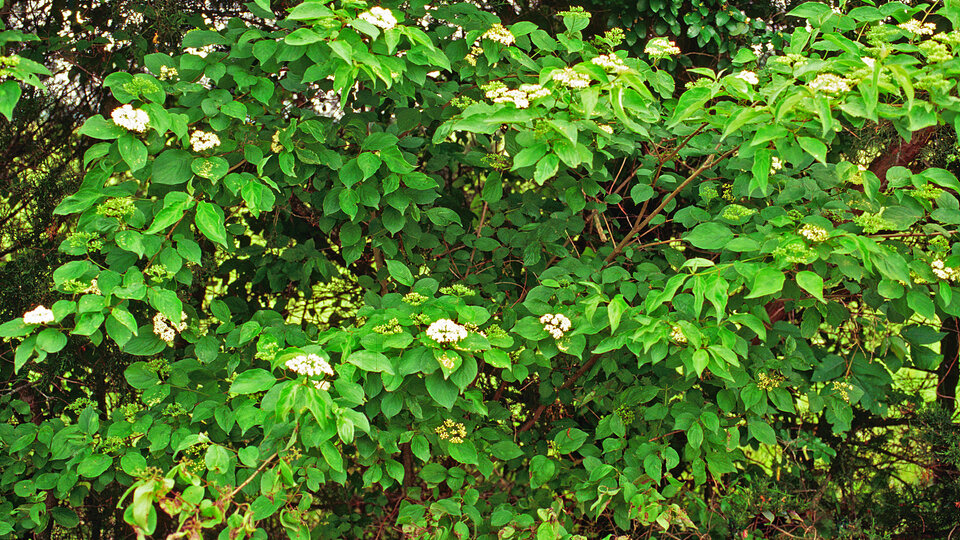
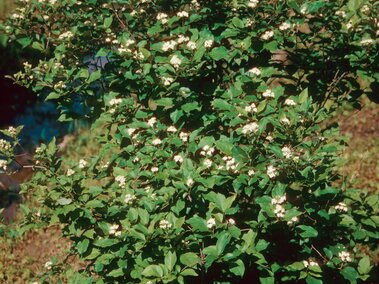
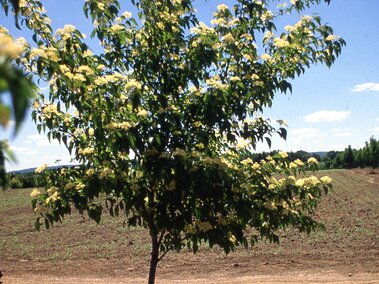
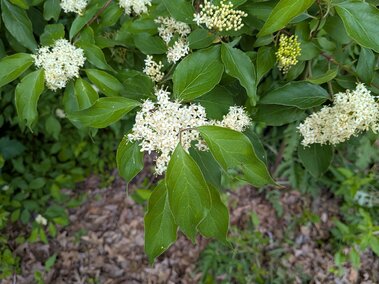
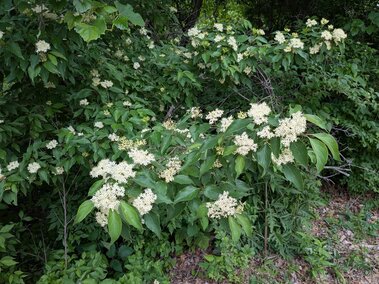
Roughleaf dogwood grows 15-25 feet high but appears as a shrub when it is younger.
Flowers
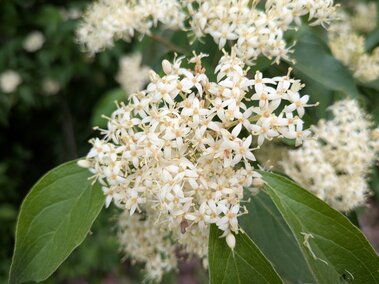
Flowers are small and yellowish-white in color. Flowers have 4 petals which are pointed at the tips and grow in spreading clusters.
Leaves
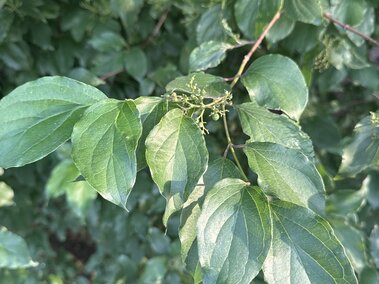
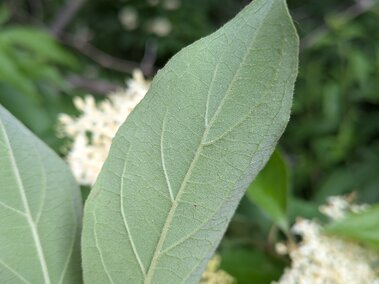
Leaves are oppositely arranged about the stem, egg or lance shaped, and reach up to 5 inches long. Margins are smooth without teeth and leaf surfaces are obviously veined. The upper surface fo the leave is an olive green color whereas the underside of the leaf is paler. Both sides of the leaf have rough, dense, wooly hairs. Leaves may have a sour milk scent.
Bark/Stems
Bark is gray-brown with shallow grooves and short, thin plates. Twigs are green and hairy when young and mature into a reddish brown color and lose their hairs.
Fruit
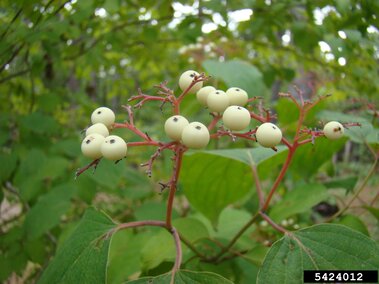
Fruits are round, fleshy, white, small, and contain 1-2 seeds. Fruits appear August through October.
Photos
Where Does It Grow?
Roughleaf dogwood is native to the Great Plains region in the United States. It is highly adaptable and tolerant of many soil and environmental conditions including full shade to full sun and rocky or moist soils. It can be found in woods, thickets, low wet grounds, bluff bases, and along streams and creeks. It can become problematic in prairies, grasslands, and pastures. It is an early settler in disturbed areas.
How Does It Spread?
Roughleaf dogwood can reproduce vegetatively through underground shoot growth, expanding thicket range. It also spreads through seed which can be dispersed by wind, water, and wildlife. Roughleaf dogwood reaches sexual maturity in about four years.
How Do I Control It?
Mechanical
Mechanical methods, including burning and mowing, are typically ineffective due to roughleaf dogwood's extensive underground root system. Mechanical methods may be used in combination with other control methods to improve success.
Contact your county weed control authority to determine appropriate removal methods.
Cultural
Avoid planting roughleaf dogwood for ornamental and other purposes.
One way that invasive plant seeds and fragments can spread is in soil. Sometimes plants are planted purposefully. You can prevent the spread of invasive plants.
PlayCleanGo: Stop Invasive Species in Your Tracks
REMOVE plants, animals and mud from boots, gear, pets and vehicles.
CLEAN your gear before entering and leaving the recreation site.
STAY on designated roads and trails.
PLANT non-invasive species.
Herbicide
Please refer to the 2026 Guide for Weed, Disease and Insect Management in Nebraska and/or contact your county weed control authority.
References and More Information
Iowa State University Extension and Outreach
Missouri Department of Conservation
Nebraska Weed Control Association
North Carolina State University Extension Gardener
Oklahoma State University Extension
Plants of Texas Rangelands Virtual Herbarium