General Information
Species Name: Galega officinalis
Also Known As: galega, professorweed, French lilac, Italian fitch
Family: Fabaceae (Bean)
Growth Form: Forb
Life Span: Perennial
Flowering Dates: July-August
Origin: Europe
Toxic: Can be fatal to sheep, cattle and humans upon ingestion
Noxious: Yes. Cogongrass is listed as a Federal Noxious Weed under the Federal Noxious Weed Act, which means it is prohibited from being sold or transported into or out of the U.S. without a permit, and measures must be taken to control, eradicate, manage, or prevent its spread throughout the country.
Why Is It Invasive?
Goatsrue invades moist areas, including streambanks and wetlands, displacing and outcompeting native species. It forms monocultures that decrease area biodiversity, decreasing food and habitat for wildlife. Goatsrue is extremely toxic to cattle, sheep, and humans when ingested. Symptoms of goatsrue toxicity include paralysis, frothing at the mouth, difficulty breathing and coughing resulting from swelling of and fluid surrounding the lungs.
What Does It Look Like?
General Characteristics
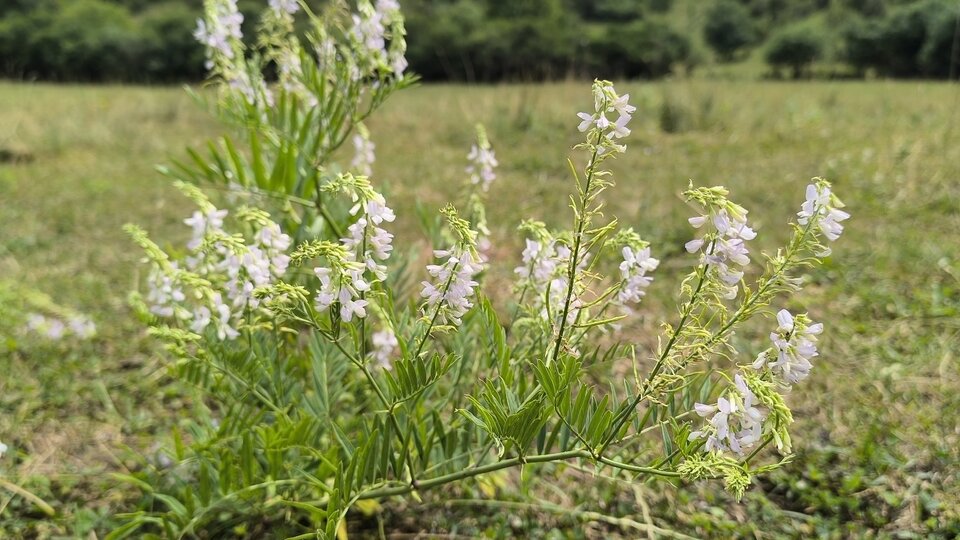
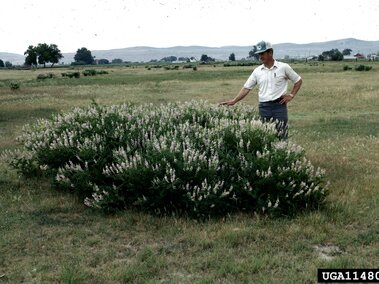
Goatsrue is an herbaceous plant that can grow up to 6 feet tall. It has many stems from the crown and a deep taproot. Flowers develop from July through August.
Flowers
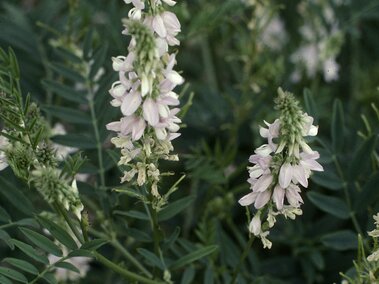
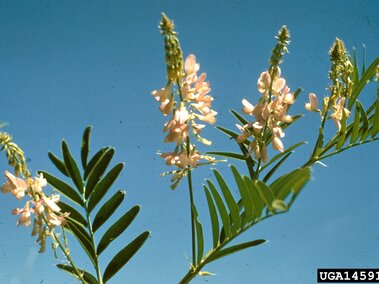
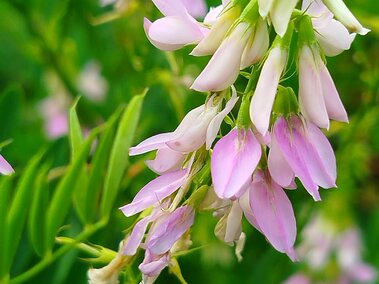
Flowers are purplish-blue to white or lilac. Each flower has 5 petals and is bell-shaped. They are clustered at the tip of stems.
Leaves
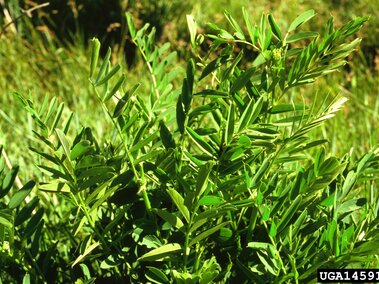
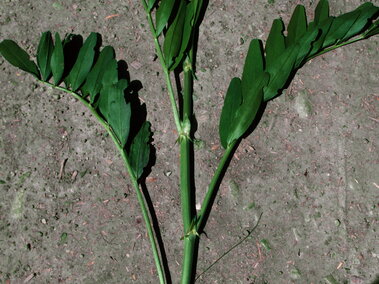
Leaves are alternately arranged about the stem and comprised of 9-21 leaflets with a terminal leaflet. Leaflets are elliptical and have complete margins without teeth, but have a small hair-like appendage at the tips. Leaflets are smooth without hairs.
Stems
Stems are upright and are typically unbranched, with several to many sprouting from the crown. Stems are hollow and smooth without hairs.
Seeds
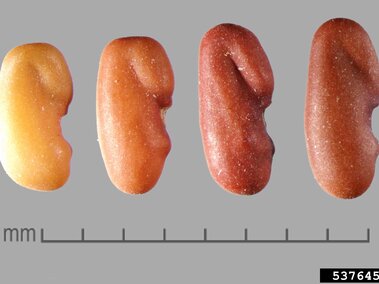
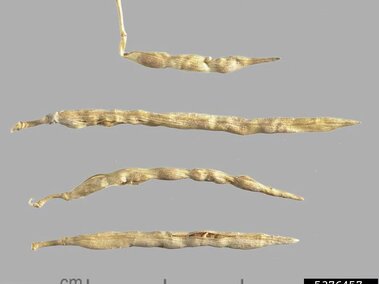
Seeds are kidney-shaped and dull yellow or mustard in color. Seeds are contained in linear, smooth pods that contain anywhere from 1 to 9 seeds. Each plant can produce upwards of 15,000 pods.
Photos
Where Does It Grow?
Goatsrue prefers wet soils and can often be found in pastures, wetlands, marshy areas, and along waterways. It prefers full sun but is shade tolerant and is able to succeed in soils with poor fertility. It is currently widespread across the Eastern United States.
How Does It Spread?
Goatsrue is spread by seed. Seeds drop on the ground near the parent plant and may be spread by birds, wildlife, water, or human vectors. Seeds can remain viable for up to 30 years.
How Do I Control It?
If you have goatsrue on your property, you must take measures to control, manage, eradicate, and prevent its spread. Best results come from a combination of control methods.
Mechanical
Mowing, clipping, and cutting without other control methods is not recommended, as goatsrue will flower and seed even when cut short. Seed pods can be clipped and properly disposed of to help prevent seed spread.
Contact your county weed control authority to determine appropriate removal methods.
Cultural
Prevention is key in managing goatsrue. Utilize an alternate cropping strategy to interrupt the goatsrue lifecycle and prevent establishment. Maintain healthy and vigorously growing grass systems in pastures and practice proper fertilizing, grazing, irrigation, and seeding. Over-irrigating can weaken pasture grasses and create an ideal environment for goatsrue to establish.
When buying hay or forage, check to make sure it is weed-free certified. Do not permit grazing on areas infested with goatsrue due to toxicity in cattle and sheep.
One way that invasive plant seeds and fragments can spread is in soil. Sometimes plants are planted purposefully. You can prevent the spread of invasive plants.
PlayCleanGo: Stop Invasive Species in Your Tracks
REMOVE plants, animals and mud from boots, gear, pets and vehicles.
CLEAN your gear before entering and leaving the recreation site.
STAY on designated roads and trails.
PLANT non-invasive species.
Chemical
Please refer to the 2026 Guide for Weed, Disease and Insect Management in Nebraska and/or contact your county weed control authority.
What Should I Do If I See It in Nebraska?
If you see common reed in Nebraska, you should report it to your county weed control authority. For guidance on what information to include in your report, check out our reporting tips.
References and More Information
California Department of Food and Agriculture
City of Portland, Oregon Environmental Services
Colorado State University Guide to Poisonous Plants
King County, Washington Natural Resources and Parks
Nebraska Weed Control Association
Nebraska Weed Free Forage Program
Pennsylvania Department of Conservation and Natural Resources
University of Nevada, Reno Extension
Utah State University Crop Resources Extension
Washington State Noxious Weed Control Board