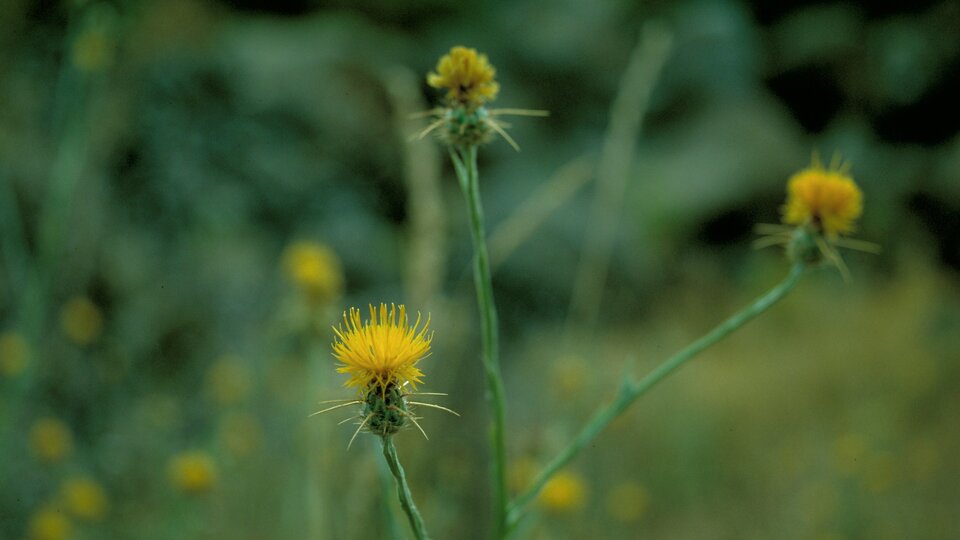
Credit: Richard Gardner, Bugwood.org
General Information
Species Name: Centaurea solstitialis
Also Known As: yellow cockspur, St. Barnaby's thistle
Family: Asteraceae (Sunflower)
Growth Form: Forb
Life Span: Biennial
Flowering Dates: July-September
Origin: Eurasia
Toxic: Can cause chewing disease in horses, resulting in death. Spiny heads can inflict soft tissue injuries in other grazing species.
Noxious: No
Why Is It Invasive?
Yellow starthistle forms dense stands and rapidly depletes moisture from the soil, limiting the ability of native species to establish in the area. It can invade pastures and rangelands and is not suitable forage due to its spines, which can injure grazing species and cause chewing disease in horses.
What Does It Look Like?
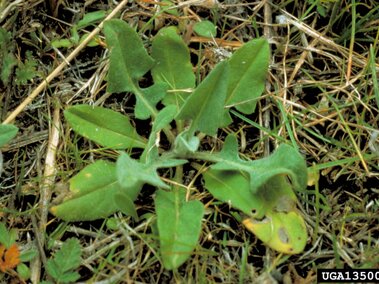
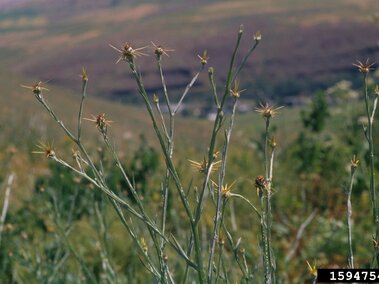
Yellow starthistle appears as a rosette in its first year and appears as a flowering stalk that can reach up to 6 feet tall in its second year.
Flowers
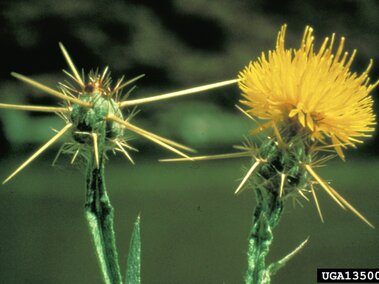
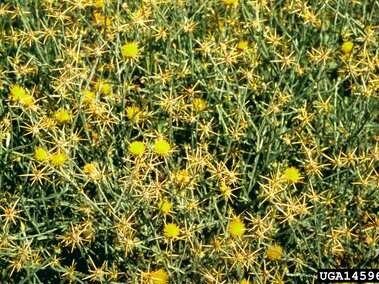
Flowers appear as bright yellow disks. Below the flowers are bracts, from which long spines emerge.
Leaves
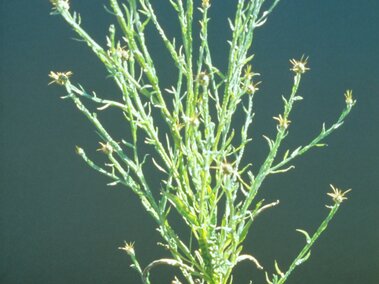
Rosette leaves are deeply lobed and grow 2-6 inches long. In its second year, leaves are alternately arranged on the stem, are not lobed, and have smooth margins. Leaves have wooly, silvery hairs.
Stems
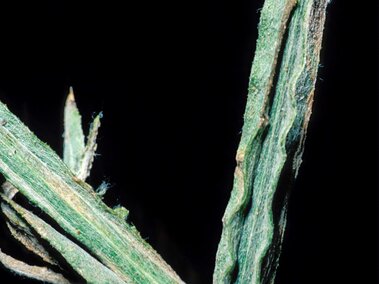
Stems are not branched or few-branched and have wooly, silver hairs.
Seeds
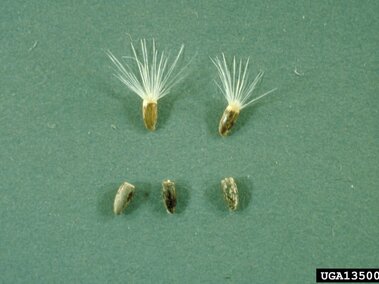
Seeds are small and have feathery white tufts attached to them, which aid in wind dispersal.
Photos
Credit: Cindy Roche, Bugwood.org
Credit: Cindy Roche, Bugwood.org
Credit: Cindy Roche, Bugwood.org
Credit: Cindy Roche, Bugwood.org
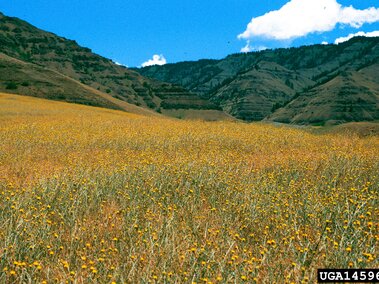
Where Does It Grow?
Yellow starthistle can be found in pastures, rangelands, and roadsides. It grows well in a variety of environments and soil types but is especially pervasive in disturbed sites. It is widespread across the United States and considered one of the most problematic weeds in many states.
How Does It Spread?
Yellow starthistle reproduces via seed, which can be dispersed by wind and water. It was initially introduced to the United States in contaminated seed.
How Do I Control It?
Mechanical
Mechanical control is often not feasible, as yellow starthistle quickly forms large, dense stands. Removal of small infestations or early rosette stage yellow starthistle can be done my hand-pulling or mowing. Be sure to use protective clothing like gloves and long sleeves when handling due to sharp spines.
Please contact your county weed control authority to determine appropriate removal methods.
Cultural
Grazing during the rosette stage may help control yellow starthistle but will not eliminate it. Do not allow livestock, especially horses, to graze in areas where second-year yellow starthistle is present.
One way that invasive plant seeds and fragments can spread is in soil. Sometimes plants are planted purposefully. You can prevent the spread of invasive plants.
PlayCleanGo: Stop Invasive Species in Your Tracks
REMOVE plants, animals and mud from boots, gear, pets and vehicles.
CLEAN your gear before entering and leaving the recreation site.
STAY on designated roads and trails.
PLANT non-invasive species.
Herbicide
Please refer to the 2026 Guide for Weed, Disease and Insect Management in Nebraska and/or contact your county weed control authority.
References and More Information
California Invasive Plant Council
Colorado Department of Agriculture
Minnesota Department of Natural Resources
Montana State University Extension
National Invasive Species Information Center
Nebraska Weed Control Association
North American Invasive Species Management Association Fact Sheet
Stubbendieck, J., Coffin, M., & Dunn, C. (2019). Weeds of the Great Plains. Nebraska Department of Agriculture.
University of California Statewide Integrated Pest Management Program
Washington State Noxious Weed Control Board