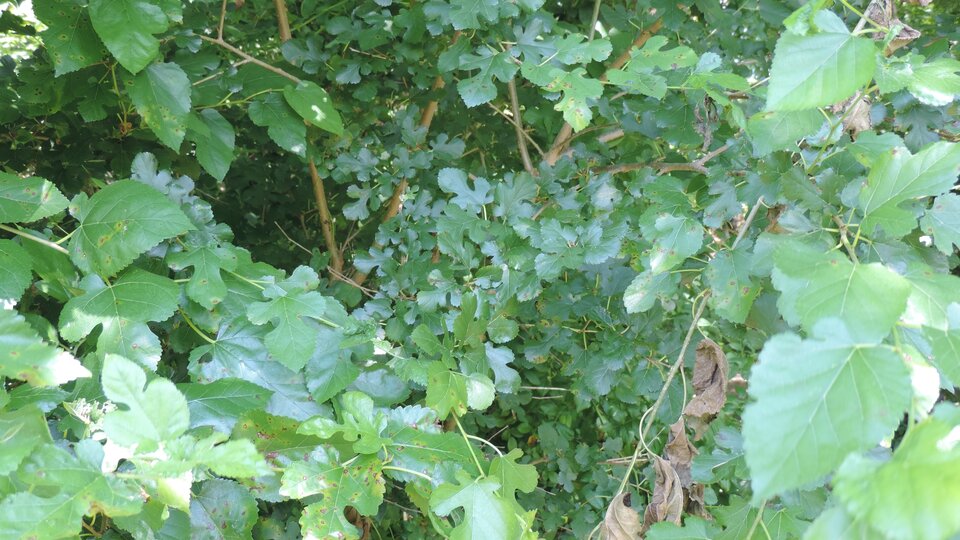
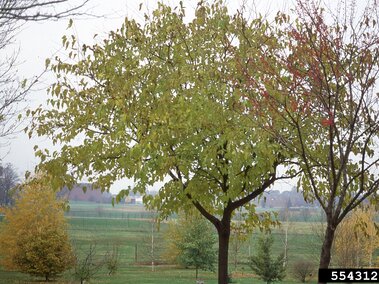
Credit: Richard Gardner, Bugwood.org
General Information
Species Name: Morus alba
Also Known As: Common mulberry, Russian mulberry, silkworm mulberry, chi sang, chin sang, moral blanco
Family: Moraceae (Mulberry)
Growth Form: Tree
Life Span: Perennial
Flowering Dates: April-May
Origin: Asia
Noxious: No
Why Is It Invasive?
White mulberry outcompetes native species, including native mulberry, and invades forests and woodlands. White mulberry can hybridize with native mulberry species and replace native mulberry populations.
What Does It Look Like?
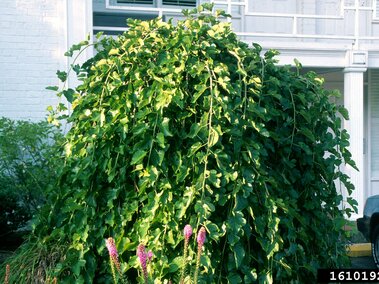
White mulberry is a deciduous tree that can reach up to 50 feet tall. Branches may appear drooping.
Flowers
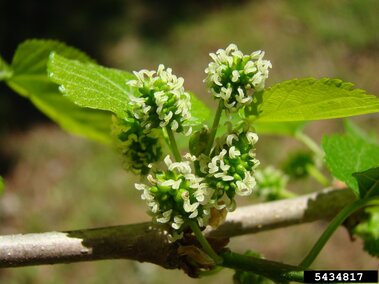
Flowers are small, green to yellow and occur in drooping spikes.
Leaves
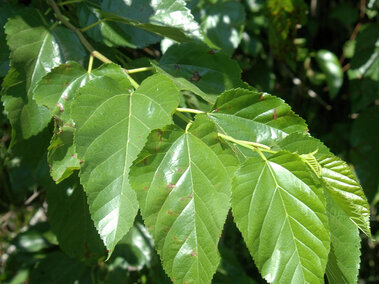
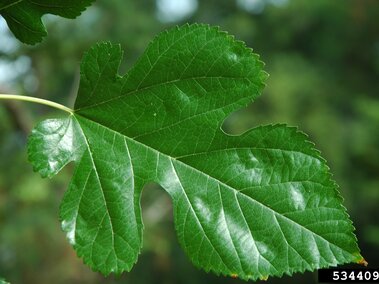
Leaves are alternately arranged about the stem and emit a milky sap when cut. Leaves are 2-6 inches long and can have 2-7 lobes or be unlobed. Their surface is smooth and glossy and they have toothed margins. Leaves are yellow during the fall.
Bark
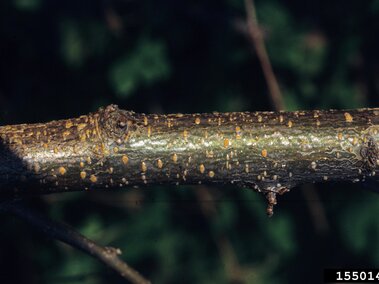
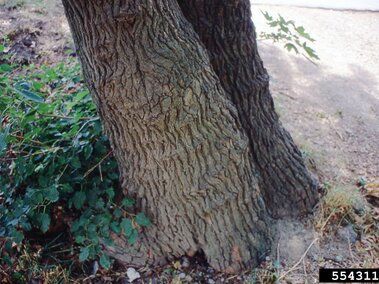
Bark is grey or brown and has ridges and furrows. Twigs are smooth, have raised pores, and are red to orange-brown. Twigs emit a milky sap when cut or damaged.
Fruits
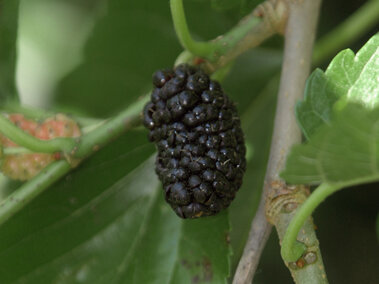
Fruits resemble blackberries and range in color from white to pink to deep purple. Fruits occur during the late summer and have a sweet taste. Fruits can be eaten by humans and are appealing to birds and wildlife.
Photos
Where Does It Grow?
White mulberry can be found in old fields, pastures, and along streams. It prefers moist, well-drain soils in sunny conditions, but can survive drought once established. It is widespread across the United States.
How Does It Spread?
White mulberry spreads via seed, which can be spread by birds and wildlife. It was originally brought to the United States for its berries.
How Do I Control It?
Mechanical
Smaller trees can be pulled or dug out and removed. Larger trees can be girdled and ground at the stump.
Please contact your county weed control authority to determine appropriate removal methods.
Cultural
Do not plant white mulberry or white mulberry hybrids intentionally and learn to identify it from native mulberry species.
One way that invasive plant seeds and fragments can spread is in soil. Sometimes plants are planted purposefully. You can prevent the spread of invasive plants.
PlayCleanGo: Stop Invasive Species in Your Tracks
REMOVE plants, animals and mud from boots, gear, pets and vehicles.
CLEAN your gear before entering and leaving the recreation site.
STAY on designated roads and trails.
PLANT non-invasive species.
Herbicide
Please refer to the 2026 Guide for Weed, Disease and Insect Management in Nebraska and/or contact your county weed control authority.
References and More Information
Missouri Department of Conservation
Nebraska Weed Control Association
North Carolina State University Extension Gardener
USDA NRCS National Plant Data Center
University of Maryland Extension
University of Minnesota Extension
Wisconsin Department of Natural Resources