General Information
Species Name: Lonicera tatarica
Family: Caprifoliaceae (Honeysuckle)
Growth Form: Shrub
Life Span: Perennial
Flowering Dates: April-June
Origin: Asia
Noxious: No
Why Is It Invasive?
Tartarian honeysuckle can invade forest edges, open meadows and pastures, and roadsides. It outcompetes native species and can change the microclimate in an area by creating shade, depleting soil nutrients, and potentially releases chemicals into the soil that inhibit the growth of native species.
What Does It Look Like?
Flowers
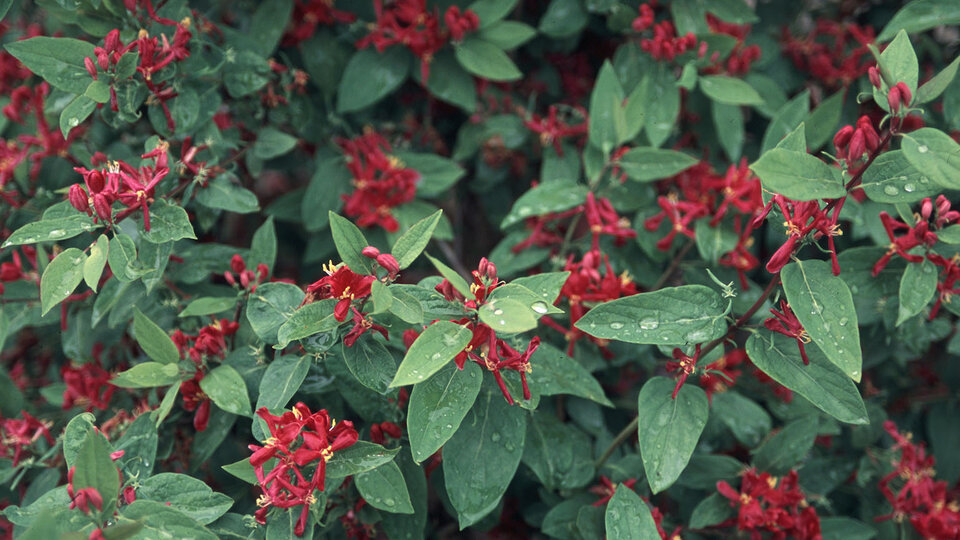
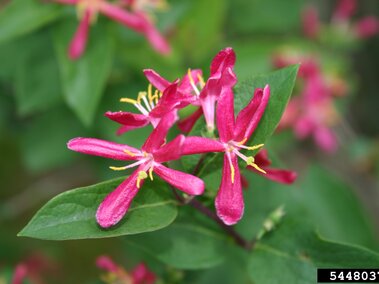
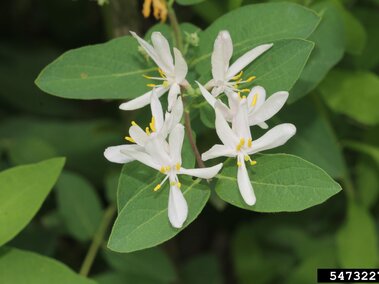
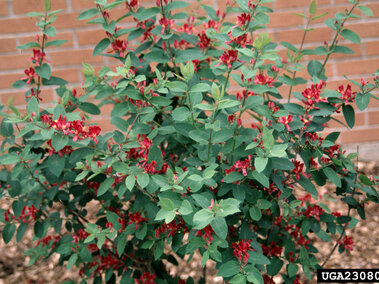
Flowers are white to pinkish or rose and tubular. They are arranged in pairs and turn yellow with age.
Leaves
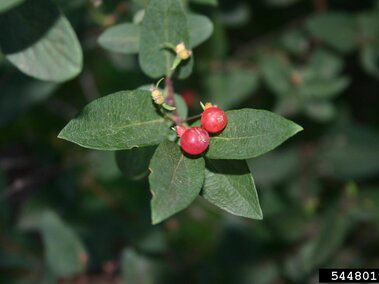
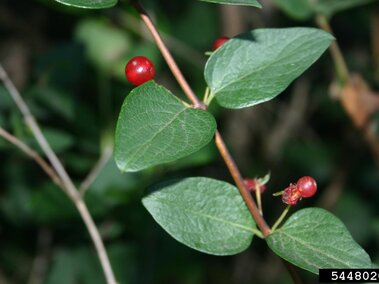
Leaves are oppositely arranged around the stem and oval. They have margins without teeth and have small hairs. The topside of the leaf is bluish to yellowish green and the undersides are paler than the top.
Stem
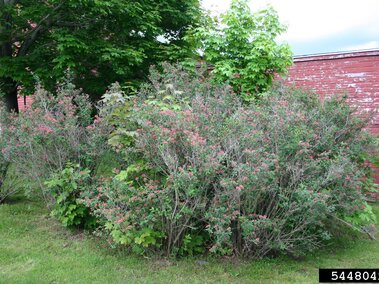
Stems are upright and branching. They are brown to greenish brown when young and ashy gray as they mature. Young stems are flexible and fine. Mature bark may be shredding.
Fruits
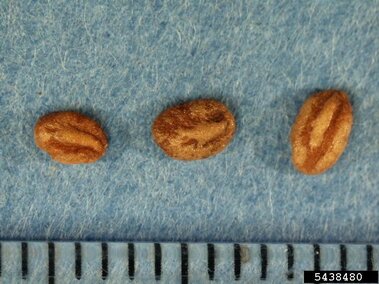
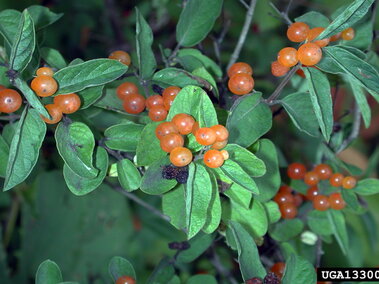
Seeds are ovate, flattened and yellow. Many seeds are contained in red to orange-ish berries that persist through the winter.
Photos
Where Does It Grow?
Tartarian honeysuckle can be found in woodlands, roadsides, disturbed areas, meadows and pastures. It can row in full sun or shade and is tolerant of many soil types. It is widely established across North America.
How Does It Spread?
Tartarian honeysuckle is spread via seed, which can be dispersed through natural, like water and wildlife, vectors or human vectors. It was initially brought to the United States to be used as an ornamental plant.
How Do I Control It?
Long-term management plans lasting 3-5 years should be developed when managing established populations of Tartarian honeysuckle.
Mechanical
Early infestations before Tartarian honeysuckle matures are easiest to manage. Hand pull or dig out small plants and dispose of them appropriately. Take care not to spread or leave berries, which contain seeds.
Please contact your county weed control authority to determine appropriate removal methods.
Cultural
Do not plant Tartarian honeysuckle for ornamental or other purposes. Instead, consider planting a native alternative.
One way that invasive plant seeds and fragments can spread is in soil. Sometimes plants are planted purposefully. You can prevent the spread of invasive plants.
PlayCleanGo: Stop Invasive Species in Your Tracks
REMOVE plants, animals and mud from boots, gear, pets and vehicles.
CLEAN your gear before entering and leaving the recreation site.
STAY on designated roads and trails.
PLANT non-invasive species.
Herbicide
Please refer to the 2026 Guide for Weed, Disease and Insect Management in Nebraska and/or contact your county weed control authority.
References and More Information
Midwest Invasive Plant Network
Minnesota Department of Agriculture
Nebraska Weed Control Association
North Carolina State University Extension Gardener
South Dakota State University Extension
Stubbendieck, J., Coffin, M., & Dunn, C. (2019). Weeds of the Great Plains. Nebraska Department of Agriculture.
Wisconsin Department of Natural Resources