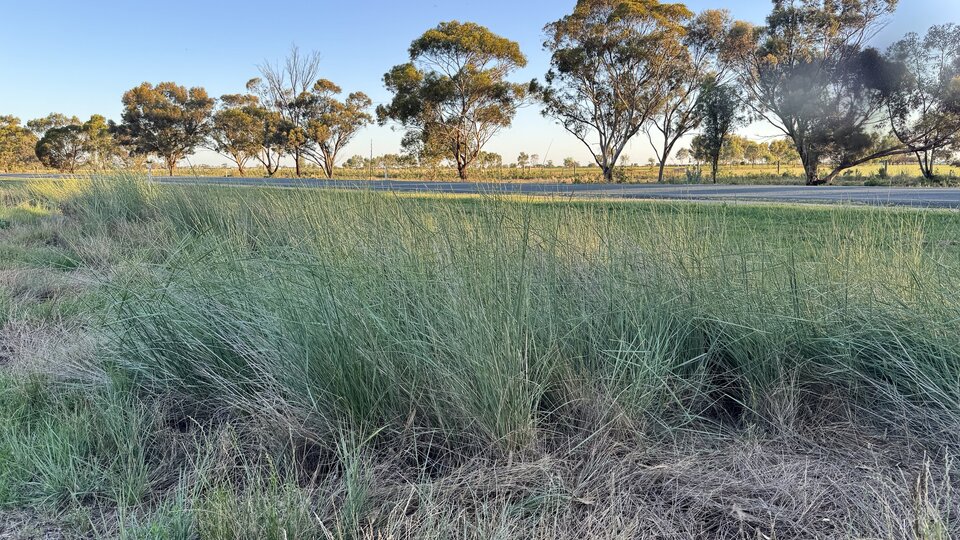
General Information
Species Name: Thinopyrum ponticum
Family: Poaceae (Grass)
Growth Form: Grass
Life Span: Perennial
Origin: Europe
Noxious: No
Why Is It Invasive?
Tall wheatgrass grows in dense stands that are tolerant of saline and alkaline soils and drought. It outcompetes native species and is quick to grow during the springtime.
What Does It Look Like?
Seedheads
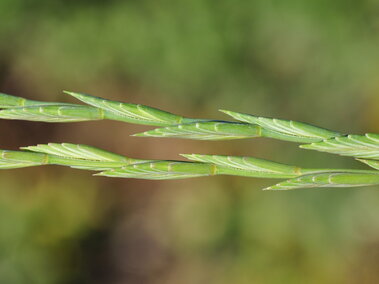
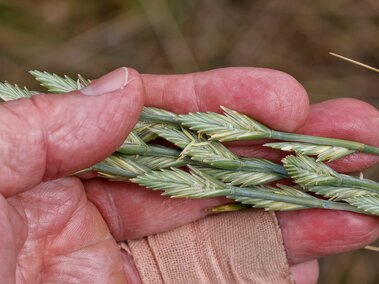
Seedheads are upright spikes that reach 3-16 inches in length. Spikelets are solitary and have 5-18 florets that may be smooth or hairy. Seedheads have a distinct, almost "braided", appearance.
Leaves
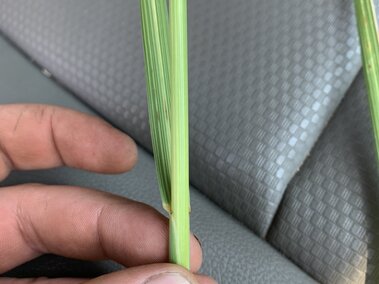
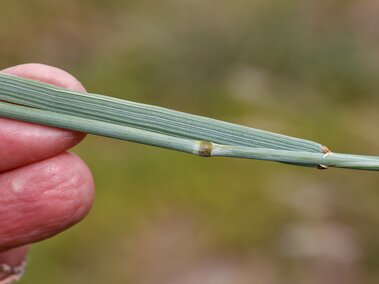
Leaves are flat or inrolled, rough, and hairy.
Stem
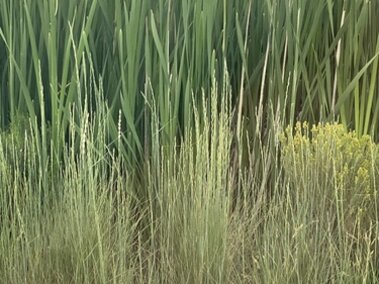
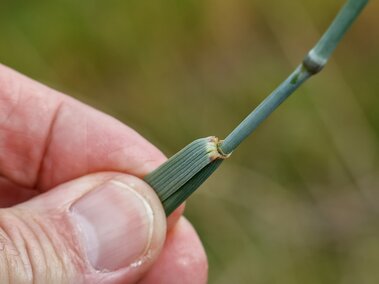
Stems are branched from the base and can reach 3-7 feet tall.
Photos
Where Does It Grow?
Tall fescue can be found in pastures, roadsides, grasslands, and grazed woods. It is tolerant of acidic soils, sunlight and shade, and drought. It is also used for turf in managed urban environments. It is widespread across North America.
How Does It Spread?
Tall fescue was brought to the United States in the late 1800s to be used for forage. It spreads through seed and creeping roots. While it may be slow to establish, it is difficult to eradicate once present. Seed can be spread through natural and human vectors, including livestock and livestock transport.
How Do I Control It?
Mechanical
Small infestations can be dug out with a shovel. Ensure the entire crown and a few inches of the roots are removed and then establish a competitive plant or grass population to prevent reestablishment.
Please contact your county weed control authority to determine appropriate removal methods.
Cultural
Use only certified, weed-free hay. Extensive grazing can help eliminate populations of tall wheatgrass, which is considered good forage.
One way that invasive plant seeds and fragments can spread is in soil. Sometimes plants are planted purposefully. You can prevent the spread of invasive plants.
PlayCleanGo: Stop Invasive Species in Your Tracks
REMOVE plants, animals and mud from boots, gear, pets and vehicles.
CLEAN your gear before entering and leaving the recreation site.
STAY on designated roads and trails.
PLANT non-invasive species.
Herbicide
Please refer to the 2026 Guide for Weed, Disease and Insect Management in Nebraska and/or contact your county weed control authority.
References and More Information
Invasive Plant Atlas of the United States
Nebraska Weed Control Association
Suisun Resource Conservation District
USDA NRCS Plant Materials Center
Utah State University Extension