General Information
Species Name: Festuca arundinacea
Also Known As: Alta fescue, reed fescue, coarse fescue
Family: Poaceae (Grass)
Growth Form: Grass
Life Span: Perennial
Origin: Europe
Noxious: No
Why Is It Invasive?
Tall fescue quickly reproduces quickly and will quickly form dense, uniform stands that prohibit the growth of other native species and reduce biodiversity. Additionally, tall fescue releases chemicals into the soil that prevent the growth of other plants in the surrounding area. It is becoming a more common choice for lawns and pasture grass despite its only fair forage quality and invasive qualities due to its drought tolerance and ability to succeed in various soil types and sun exposures.
What Does It Look Like?
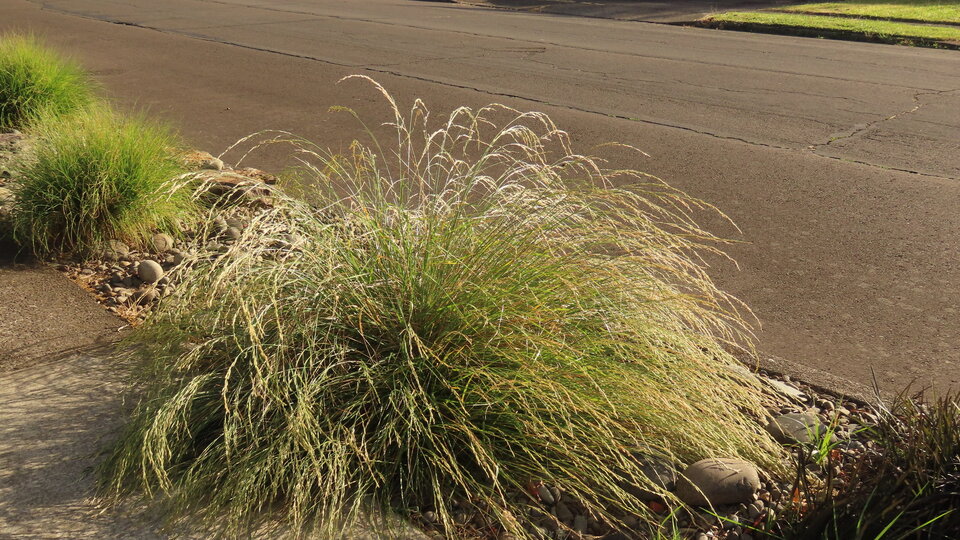
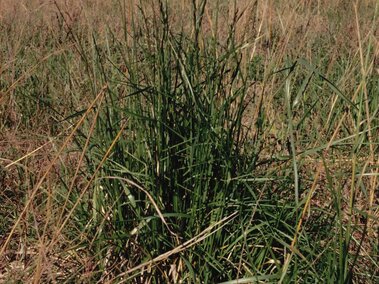
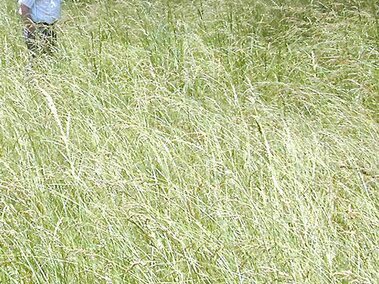
Tall fescue can grow up to 4 feet high but is often kept shorter for use in lawns.
Seedheads
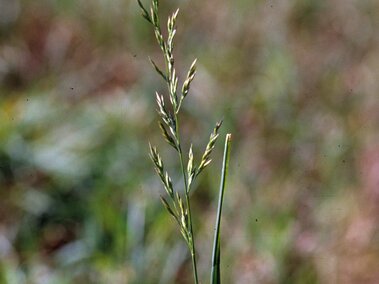
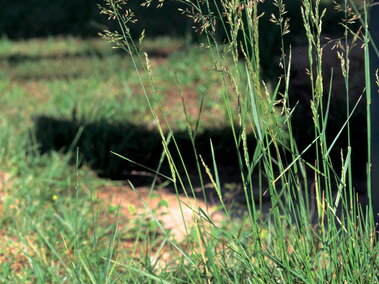
Seedheads are branched and spikelets have a sharply pointed tip. They are green to yellow in color.
Leaves
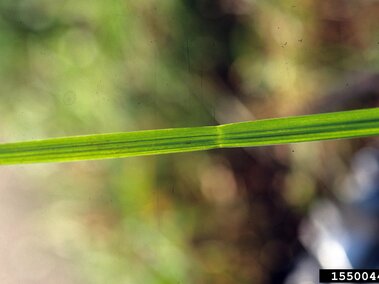
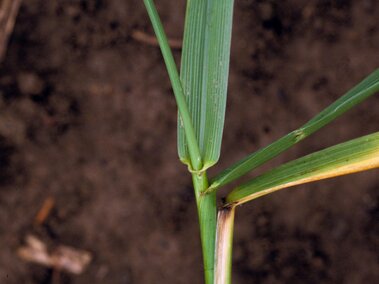
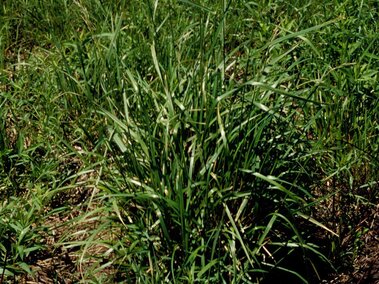
Leaves are slightly ridged, have no hairs, and have a pointed tip. They are flat or folded, stiff, and broader than other similar grasses. They may partially encircle the stem at the base.
Stem
Upright and ascending
Photos
Where Does It Grow?
Tall fescue can be found in pastures, roadsides, grasslands, and grazed woods. It is tolerant of acidic soils, sunlight and shade, and drought. It is also used for turf in managed urban environments. It is widespread across North America.
How Does It Spread?
Tall fescue was brought to the United States in the late 1800s to be used for forage. It spreads through seed and creeping roots. While it may be slow to establish, it is difficult to eradicate once present. Seed can be spread through natural and human vectors, including livestock and livestock transport.
How Do I Control It?
Mechanical
Small infestations can be dug out with a shovel. Ensure the entire crown and a few inches of the roots are removed and then establish a competitive plant or grass population to prevent reestablishment.
Please contact your county weed control authority to determine appropriate removal methods.
Cultural
Use only certified, weed-free hay and select other grasses for ornamental and pasture purposes. Permitting grazing on established areas of tall fescue can help control populations, but it is generally only fair forage and can sometimes cause lameness.
One way that invasive plant seeds and fragments can spread is in soil. Sometimes plants are planted purposefully. You can prevent the spread of invasive plants.
PlayCleanGo: Stop Invasive Species in Your Tracks
REMOVE plants, animals and mud from boots, gear, pets and vehicles.
CLEAN your gear before entering and leaving the recreation site.
STAY on designated roads and trails.
PLANT non-invasive species.
Herbicide
Please refer to the 2026 Guide for Weed, Disease and Insect Management in Nebraska and/or contact your county weed control authority.
References and More Information
Iowa State University Extension and Outreach
Michigan State University Plant and Pest Diagnostics
Missouri Department of Conservation
Nebraska Weed Control Association
Pennsylvania State University Extension
Stubbendieck, J., Coffin, M., & Dunn, C. (2019). Weeds of the Great Plains. Nebraska Department of Agriculture.
USDA NRCD National Plant Data Center
University of Illinois Urbana-Champaign Extension
University of Kentucky Cooperative Extension Service