General Information
Species Name: Bromus inermis
Family: Poaceae (Grass)
Growth Form: Grass
Life Span: Perennial
Origin: Europe
Noxious: No
Why Is It Invasive?
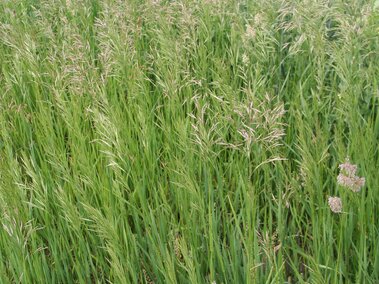
Smooth brome begins growing before native warm season grasses and can take over areas before native grasses start growing. It forms dense covers, outcompeting and crowding out native vegetation. It can spread into grasslands, prairies, and roadsides.
What Does It Look Like?
General Description
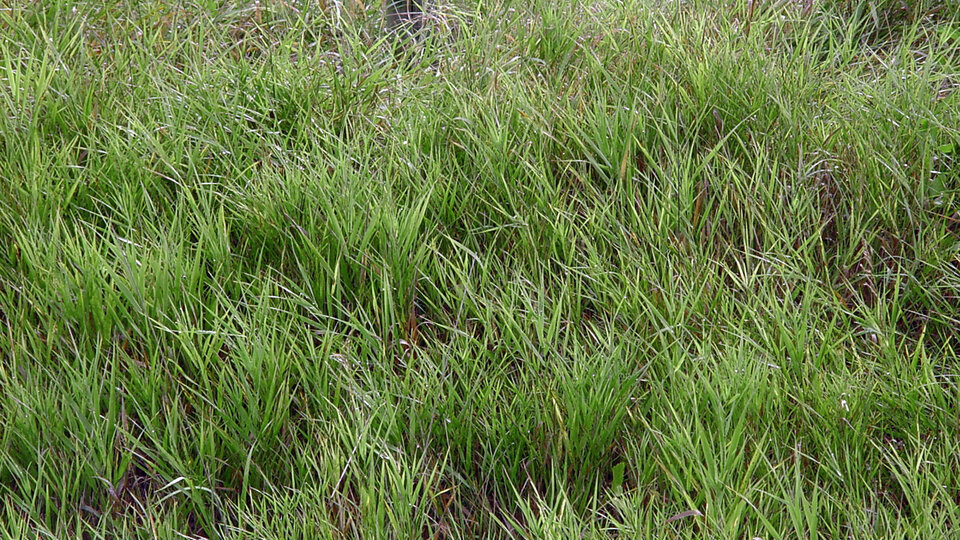
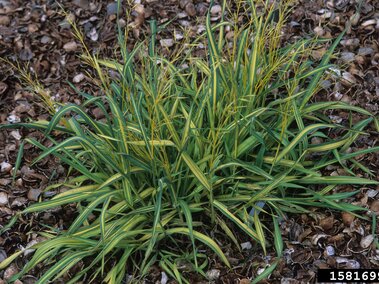
Grass that grows 2-4 feet high and begins growing early in the year.
Seedheads
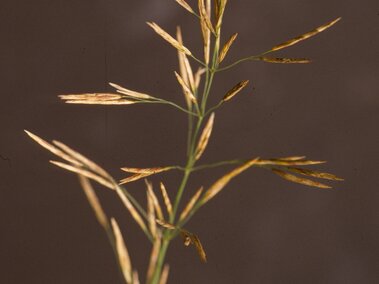
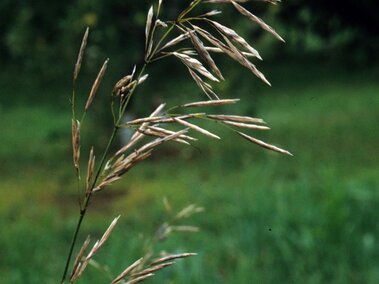
Seedheads grow in a branching cluster of spikelets, which bloom in June and July. Seedhead may range in color from yellow to purplish.
Leaves
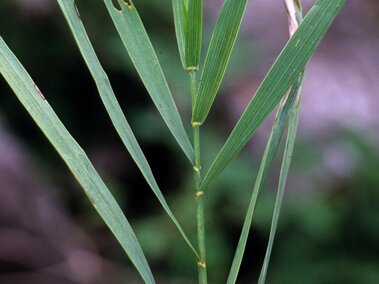
Leaves are alternate about the stem and are usually hairless. They are flat and smooth without hairs.
Stem
Stems are upright and may grow up to 4 feet in height.
Seeds
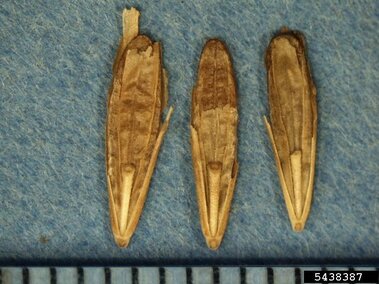
Seeds are brown, flat, and oblong.
Photos
Where Does It Grow?
Smooth brome can be found in pastures, fields, grasslands, and roadsides. It prefers moist soils, well-draining soils but will establish in sandier soils. It is widely established across North America.
How Does It Spread?
Smooth brome spreads by seed and underground rhizomes. It was initially brought to the United States in the late 1800s to be used for foraging, hay production, and erosion control.
How Do I Control It?
Mechanical
Spring mowing, followed by subsequent mowing as needed, can help effectively control smooth brome. Late spring burns can also help reduce smooth brome.
Please contact your county weed control authority to determine appropriate removal methods.
Cultural
Smooth brome is considered excellent forage for livestock. Heavy grazing can reduce smooth brome infestations.
Purchase certified, weed-free hay for livestock and other purposes.
One way that invasive plant seeds and fragments can spread is in soil. Sometimes plants are planted purposefully. You can prevent the spread of invasive plants.
PlayCleanGo: Stop Invasive Species in Your Tracks
REMOVE plants, animals and mud from boots, gear, pets and vehicles.
CLEAN your gear before entering and leaving the recreation site.
STAY on designated roads and trails.
PLANT non-invasive species.
Herbicide
Please refer to the 2026 Guide for Weed, Disease and Insect Management in Nebraska and/or contact your county weed control authority.
References and More Information
Minnesota Department of Natural Resources
Nebraska Weed Control Association
Pennsylvania State University Extension
Stubbendieck, J., Coffin, M., & Dunn, C. (2019). Weeds of the Great Plains. Nebraska Department of Agriculture.
USDA Natural Resource Conservation Service
University of Illinois Urbana-Champaign
University of Missouri Extension
Utah State University Extension