General Information
Species Name: Ulmus pumila
Family: Ulmaceae (Elm)
Growth Form: Tree
Life Span: Perennial
Flowering Dates: March-April
Origin: Asia
Noxious: No
Why Is It Invasive?
Siberian elm is highly adaptable and grows rapidly. It is especially invasive in disturbed prairie areas where it can drastically change the ecosystem. Siberian elm can also cross pollinate with native elms, which can make identification and control difficult.
What Does It Look Like?
General Description
Deciduous tree reaching 30-70 feet high with an open, rounded crown.
Flowers
Flowers are green and bell-shaped, lacking true petals, and have 4-5 lobes. Flowers will appear before leaves in the spring.
Leaves
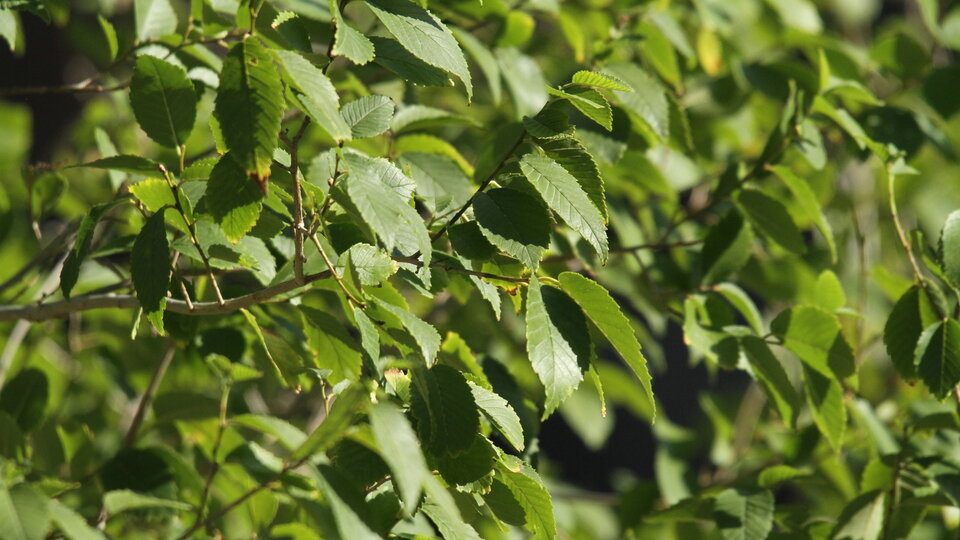
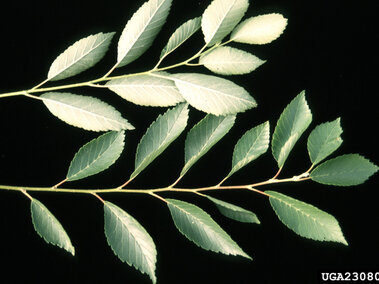
Leaves are alternately arranged, 1-2 inches long, elliptic, and have toothed margins with pointed tip. Upper surfaces are dark green and lower surfaces are paler green. Leaves are without hairs.
Stems and Bark
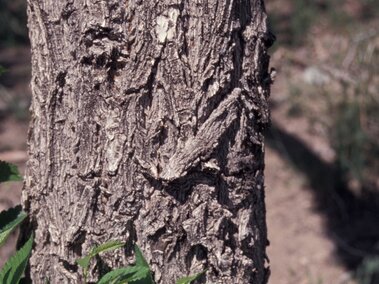
Twigs are flexible, thing, and have some hairs. They are grayish-brown and drooping. Limbs are weak and known for frequently dropping. The bark is dark gray and shallowly furrowed once the tree is mature.
Fruit
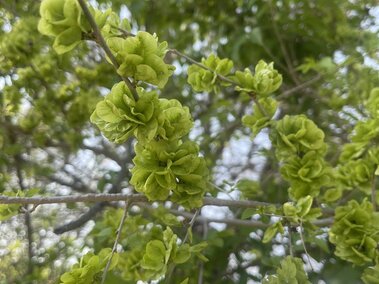
Fruits are winged, round, and smooth. They hang in clusters and contain one seed per fruit.
Photos
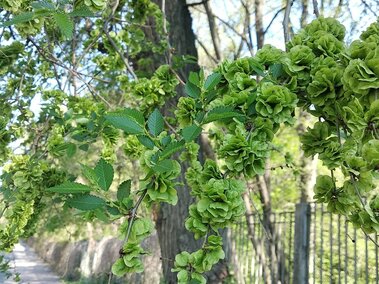
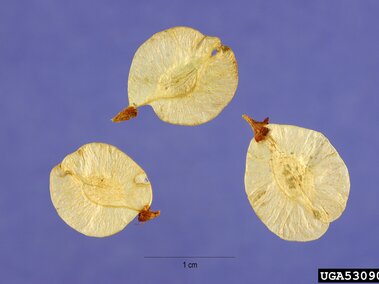
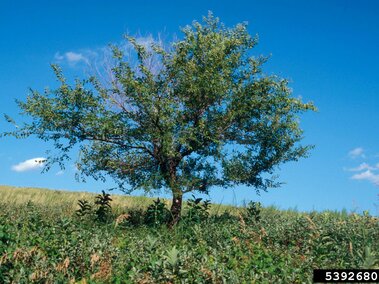
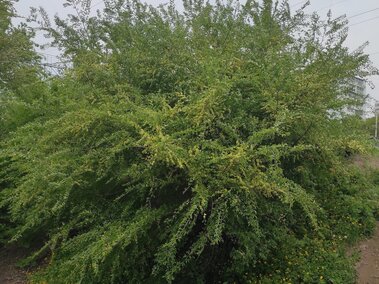
Where Does It Grow?
Siberian elm can be found in disturbed sites, stream banks, pastures, rangelands, roadsides, and prairies. It doesn't tolerate flooding and rarely invades forested areas. Siberian elm prefers full sun and is shade intolerant. It is widespread across North America.
How Does It Spread?
Siberian elm was initially introduced to the United States in the 1960s. It was sold commercially due to its hardiness to be used as a windbreak tree. It is spread by seed which can be dispersed by wind, water, wildlife, and human vectors.
How Do I Control It?
Mechanical
Young saplings can be removed by hand. Girdle mature trees in late spring and allow one to two years for full death of plant.
Please contact a certified arborist for further information on mechanical control methods.
Cultural
Do not use Siberian elm for ornamental or windbreak purposes. Consider using a native alternative like oak, hackberry, or basswood.
One way that invasive plant seeds and fragments can spread is in soil. Sometimes plants are planted purposefully. You can prevent the spread of invasive plants.
PlayCleanGo: Stop Invasive Species in Your Tracks
REMOVE plants, animals and mud from boots, gear, pets and vehicles.
CLEAN your gear before entering and leaving the recreation site.
STAY on designated roads and trails.
PLANT non-invasive species.
Herbicide
Please refer to the 2026 Guide for Weed, Disease and Insect Management in Nebraska and/or contact your county weed control authority.
References and More Information
Colorado Department of Agriculture
Minnesota Department of Natural Resources
North Carolina State University Extension Gardener
Stubbendieck, J., Coffin, M., & Dunn, C. (2019). Weeds of the Great Plains. Nebraska Department of Agriculture.
USDA Natural Resource Conservation Service
University of Minnesota Extension