General Information
Species Name: Halogeton glomeratus
Family: Chenopodiaceae (Goosefoot)
Growth Form: Forb
Life Span: Annual
Flowering Dates: June-September
Origin: Eurasia
Toxic: Contains oxalates that can result in a calcium deficiency in sheep when consumed, with as little as 0.1% of body weight consumed causing death; rare poisoning in cattle
Noxious: No
Why Is It Invasive?
Saltlover easily invades disturbed areas and outcompetes native vegetation and desirable forage. Saltlover can leach salts into topsoil, which can make it inhospitable for native plants. Additionally, consumption of saltlover by sheep can be fatal.
What Does It Look Like?
General Description
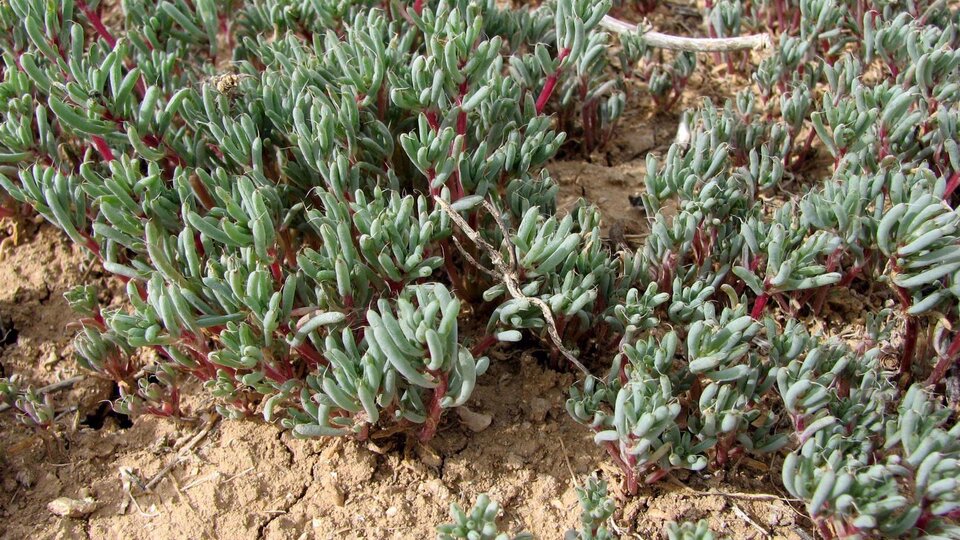
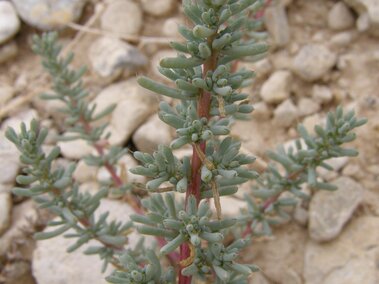
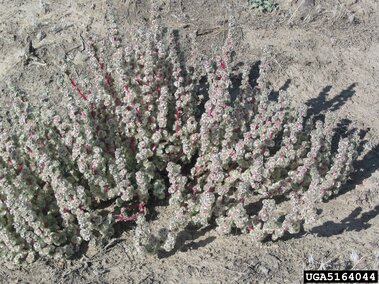
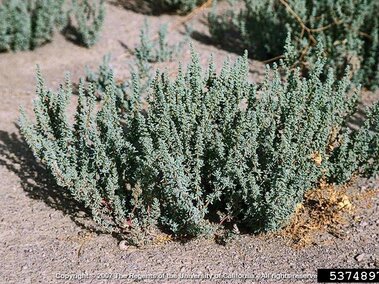
Short, erect forb with small, fleshy leaves and vibrant purplish-red stems.
Flowers
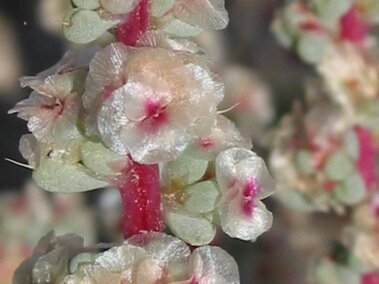
Flowers are green to pinkish and lack petals but have 5 lobes. They have winglike hairs at their base and grow in clusters at the top of the stem.
Leaves
Leaves are alternately arranged and numerous. They are small, tubular, flesh, and smooth with a bluish-green color. They have a needle-like spine at their tip.
Stems
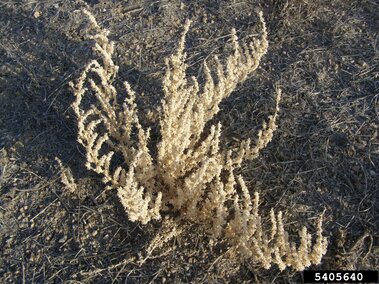
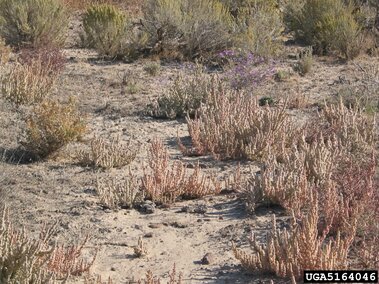
Stems are upright, branched from the base, and fleshy. They range in color from purplish, pinkish, to red when they are young and then mature to a yellow or white color. They can reach up to 1.5 feet in height.
Seeds
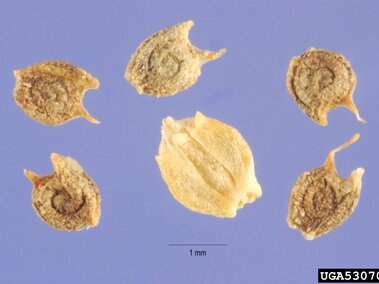
Seeds are flattened and brown to brownish-black
Photos
Where Does It Grow?
Saltlover can be found in disturbed areas and prefers alkaline and saline soils. It can be seen growing along roadsides, in pastures, meadows, rangelands, or lakebeds. It is established across the western United States.
How Does It Spread?
Saltlover reproduces by seed, which can be spread by livestock and wildlife.
How Do I Control It?
Mechanical
Hand pulling or digging can be effective, especially for small or early infestations. Take care not to spread seeds when manually removing plants.
Please contact your county weed control authority to determine appropriate removal methods.
Cultural
Do NOT permit livestock, especially sheep, to graze in areas where saltlover is present due to toxicity.
One way that invasive plant seeds and fragments can spread is in soil. Sometimes plants are planted purposefully. You can prevent the spread of invasive plants.
PlayCleanGo: Stop Invasive Species in Your Tracks
REMOVE plants, animals and mud from boots, gear, pets and vehicles.
CLEAN your gear before entering and leaving the recreation site.
STAY on designated roads and trails.
PLANT non-invasive species.
Herbicide
Please refer to the 2026 Guide for Weed, Disease and Insect Management in Nebraska and/or contact your county weed control authority.
References and More Information
California Invasive Plant Council
Colorado Department of Agriculture
Nebraska Weed Control Association
Stubbendieck, J., Coffin, M., & Dunn, C. (2019). Weeds of the Great Plains. Nebraska Department of Agriculture.
USDA Agricultural Research Service
USDA Natural Resource Conservation Service
US Forest Service Fire Effects Information System
University of Arizona Cooperative Extension
Utah State University Extension