General Information
Species Name: Sus scrofa
Also Known As: Wild pigs, wild boars, razorbacks, wild hogs, Old World swine
Origin: Eurasia
Why Is It Invasive?
Feral hogs pose many threats to Nebraska. Feral hogs damage crops and rangeland by consuming, rooting in, or trampling them. Feral hogs are non-discriminate about crop types they will consume. Feral hogs carry at least 30 known viral and bacterial diseases and nearly 40 known parasites that can transmit to humans, pets, livestock, and other wildlife, making them a significant human health and safety hazard. Additionally, feral hogs can be aggressive towards people and attacks have been documented. Feral hogs also compete with native wildlife species for habitat and food, may directly predate wildlife young. Their rooting and wallowing behavior can also increase erosion along waterways and large groups can contaminate water sources with fecal material.
Identification and Ecology
General Characteristics
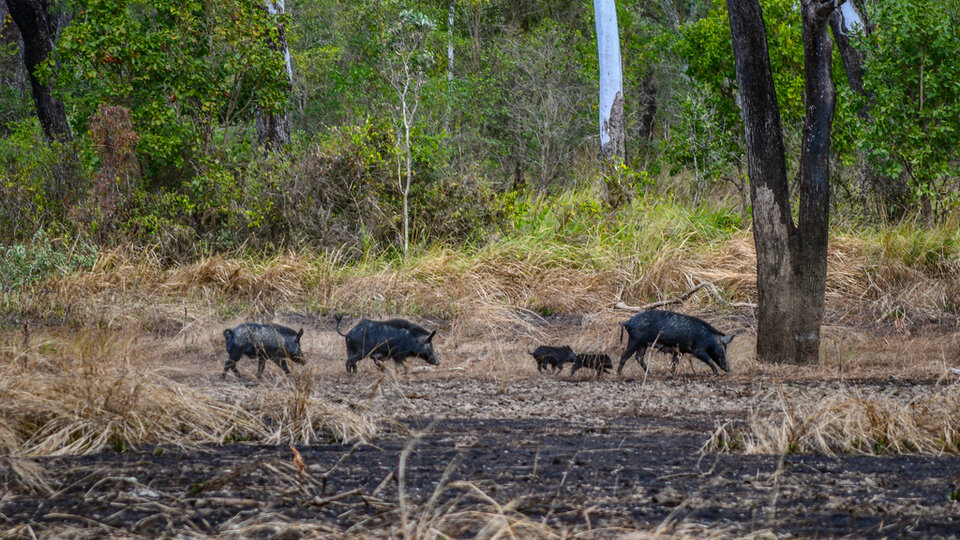
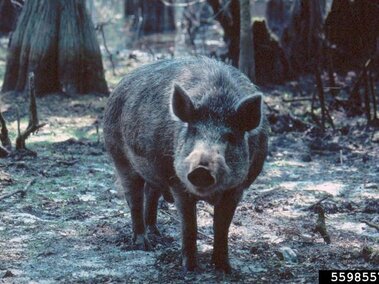
Feral hogs look very similar to domestic pigs, but a feral hog is any swine that is not confined by humans to prevent their escape into the wild. Feral hogs are generally thinner than domestic swine and have thicker hides of coarse, bristly hairs. They may also have longer tusks and long snouts.
Size
Feral hogs are about 3 feet high at the shoulder and 5 feet in length. Females are typically smaller than males, weighing an average of 110 pounds compared to an average of 130 pounds for males. Feral hogs weighing as much as 400 pounds have been documented.
Coat
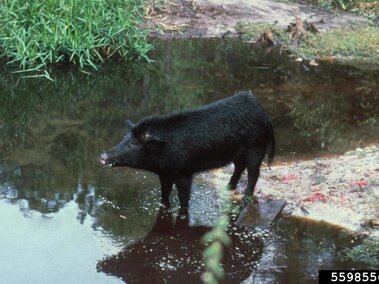
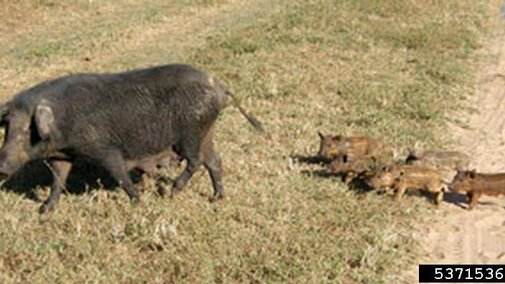
Feral hogs may vary in coat color and have thick hides of coarse, bristly hair. They range in color from black, brownish-red, to white and may have a speckled pattern or be solid in color. Juveniles may have horizontal light striping that disappears as they get older.
Hooves
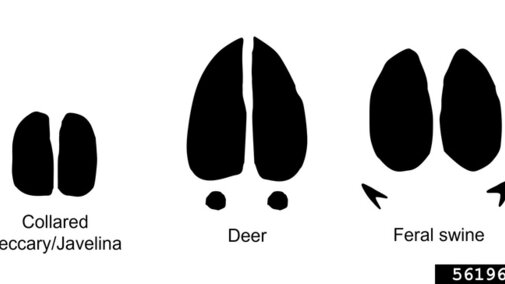
Feral hog hooves have two distinct toes and with dewclaws on both the front and rear hooves. They have a more blunt toe-tip than other two-hoofed species and the hooves are more parallel.
Life Cycle
Feral hogs can live for 5-8 years and reach sexual maturity at 6 months of age. Females can produce two litters annually, producing 1-7 piglets in each litter.
Behavior
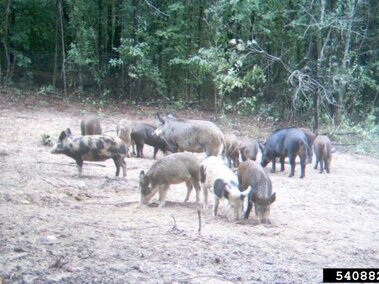
Feral hogs move in family groups called "sounders" or may be solitary. Feral hogs are nocturnal.
Diet
Opportunistic omnivore
Habitat
Generalists, succeeding in nearly any environment with adequate access to food and water.
Photos
What Are The Signs of Feral Hog Presence?
Tracks
Tracks are approximately 2 1/2 inches long and have two hooves. Their toe tips are blunt and hooves are shorter in length than deer. The hind tracks will often be ahead of the front tracks and strides can average around 18 inches.
Scat
Scat may resemble dog feces and have partially digested remnants of grains, acorns, or animals that were consumed.
Damage to Vegetation
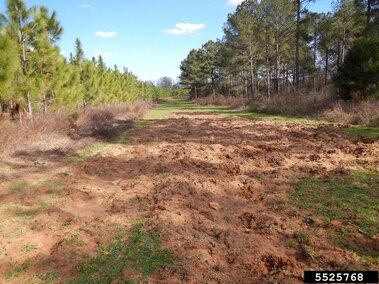
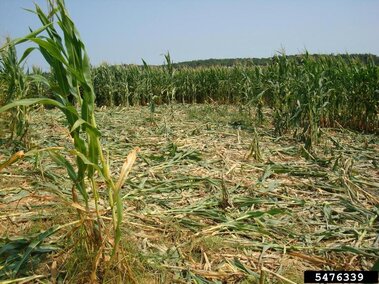
Feral hogs consume crops, grasses, and other plants. They will leave large dirt patches after extensive rooting or digging while looking for food.
Trails
Feral hogs can form trails or tunnels through thick vegetation.
Muddy Wallows
Feral hogs wallow in water-logged or muddy areas to cool down and may leave muddy wallows during warmer months.
Tree Bark Damage
After wallowing, feral hogs will often rub against trees, damaging or removing tree bark.
Credit: Triston Hansford, University of Georgia, Bugwood.org
Feral hogs may leave tracks, which can be differentiated from deer.
Credit: Karan A. Rawlins, University of Georgia, Bugwood.org
Feral hogs root and dig searching for food, damaging and destroying the land.
Credit: Craig Hicks, Bugwood.org
Feral hogs consume and destroy agricultural crops.
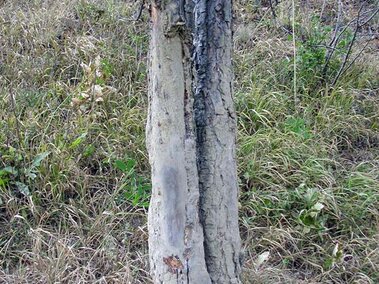
Credit: Sasa Kunovac, University of Sarajevo, Bugwood.org
Feral hogs damage trees by rubbing against them and removing bark.
How Do They Spread?
Feral hogs were initially introduced to North America in the 16th century as domesticated livestock but then escaped captivity. Wild Eurasian boars were also introduced in the late 19th and early 20th centuries for sport hunting, further adding to the feral hog population and permitting hybridization. Feral hogs are very adaptable and have few natural predators, allowing them to expand their range quickly. Feral hogs may also be moved by human activity.
Distribution
Feral hogs are widely distributed across the southern United States, sporadically across the upper East Cost, and are encroaching into the Pacific North West region. Feral hogs were reported in Nebraska in the mid-to-late 2000s but have been successfully eradicated. They currently have limited distribution in southern Kansas and Missouri.
Control
Cultural
Vaccinate your livestock to prevent disease transfer from feral hogs and practice appropriate deworming techniques as recommended by a licensed veterinarian. Keep domestic swine confined with fencing to prevent them from escaping. Do not attempt to feed, domesticate, or interact with a feral hog.
Mechanical
Fencing can be an effective way to exclude feral hogs from a small area, but becomes impractical for larger areas. Utilization of wire mesh, electrical strand, or a combination can help exclude feral hogs from an area.
Contact Nebraska Game and Parks Commission to determine appropriate feral hog removal methods.
What Should I Do if I See Feral Hogs in Nebraska?
If you see signs or see a feral hog in Nebraska, report it! For guidance on what information to include in your report, check out our reporting tips. Do not attempt to approach or kill a feral hog by yourself.
References and More Information
Florida Fish and Wildlife Conservation Commission
Mississippi State University Extension - Wild Pig Info
Missouri Department of Conservation
National Invasive Species Information Center
Nebraska Game and Parks Commission Furbearer and Carnivore Program