General Information
Species Name: Ambrosia grayi
Also Known As: woollyleaf bursage, woollyleaf povertyweed, woollyleaf franseria, lagoonweed
Family: Asteraceae (Sunflower)
Growth Form: Forb
Life Span: Perennial
Flowering Dates: August-October
Origin: Native
Toxic: Yes, bur ragweed can cause nitrate poisoning in livestock but is usually unpalatable.
Noxious: Yes. Bur ragweed is listed as a County Designated Noxious Weed for Banner County. Please report to the local weed control authority if found in the following counties: Banner.
Why Is It Noxious?
Despite being a native plant, bur ragweed can spread rapidly, forming dense colonies that crowd out desirable native and forage species. Although livestock typically will not ingest it, it can cause nitrate poisoning if consumed in large amounts.
What Does It Look Like?
General Characteristics
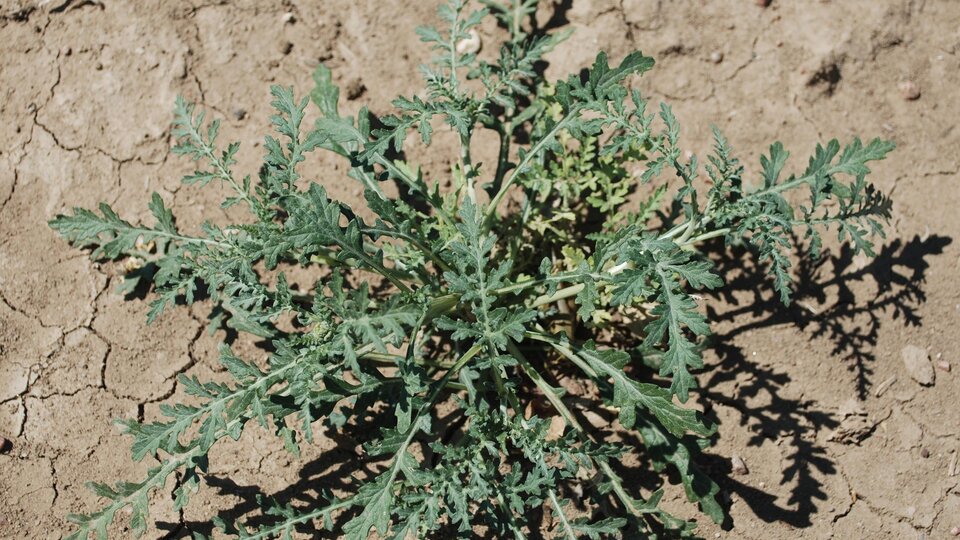
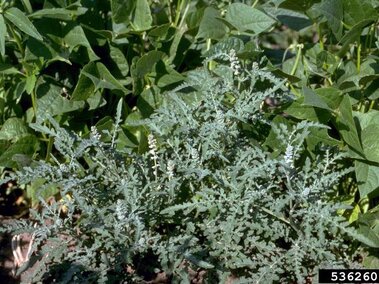
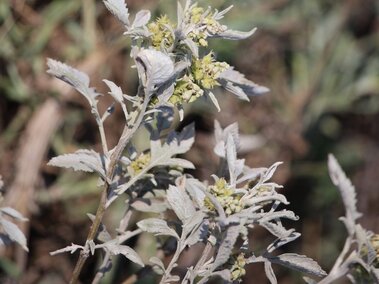
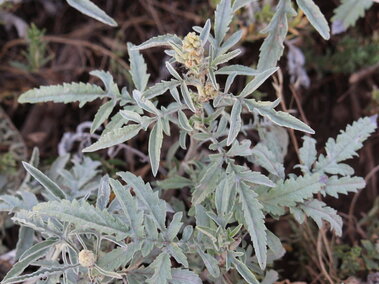
Bur ragweed is bushy and grows up to 2 feet high. It has a sliver-gray appearance due to woolly hairs covering the majority of the plant.
Flowers
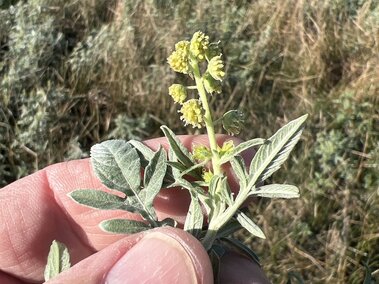
Flowers are greenish-yellow and about 1/4 inch in diameter. There are separate male and female heads.
Leaves
Leaves are alternately arranged, ovate, and irregularly lobed. The tops and bottoms of the leaves have small hairs.
Stems
Stems are branching and covered in fine, woolly hairs.
Seeds
Seeds are small and contained in bur-like fruits with straight or hooked spines.
Photos
Where Does It Grow?
Bur ragweed invades disturbed areas including pastures, agricultural fields and roadsides. It does well in sandy soils of varying moisture levels. It is native to the Great Plains region.
How Does It Spread?
Bur ragweed is spread via seed that can be spread through natural or human vectors. The bur-like fruits that contain seeds can get caught on wildlife, livestock, pets, clothes, shoes, and equipment.
How Do I Control It?
Mechanical
Small infestations can be removed by digging and pulling out young plants.
Contact your county weed control authority to determine appropriate removal methods.
Cultural
Grazing is not recommended due to possible nitrate toxicity.
Use only certified weed free hay.
Nebraska Weed Free Forage Program
Help prevent leafy spurge spread by checking clothing, equipment, and vehicles for seeds after being in infested or suspect areas.
REMOVE plants, animals and mud from boots, gear, pets and vehicles.
CLEAN your gear before entering and leaving the recreation site.
STAY on designated roads and trails.
PLANT non-invasive species.
Play, Clean, Go: Stop Invasive Species in Your Tracks
Chemical
Please refer to the 2026 Guide for Weed, Disease and Insect Management in Nebraska and/or contact your county weed control authority.
What Should I Do If I See It in Nebraska?
If you see bur ragweed in Nebraska, you should report it to your county weed control authority. For guidance on what information to include in your report, check out our reporting tips.
References and More Information
County Weed Directors' Association of Kansas
Jefferson County, Kansas Public Works
Midwest Invasive Species Information Network
Nebraska Weed Free Forage Program