General Information
Species Name: Amblyomma americanum
Family: Ixodidae (Acari)
Life Cycle: Complete (Egg>Larva>Nymphs>Adult); life cycle takes 1-2 years to complete and the tick will live on three hosts during its lifetime
Activity: Highest activity in spring and summer
Origin: Southwestern United States
Host Species: Nymphs and larvae feed on small rodents and mammals; adult ticks feed on medium to large mammals including deer, livestock, humans, and pets
Why Is It Invasive?
Lone star ticks pose a significant threat to human and animal health. Lone star ticks feed on livestock, domestic pets, wildlife, and people, during which they can transmit diseases like Ehrlichia, Tularemia, and alpha-gal syndrome (red meat allergy). They can also transmit Southern Tick Associated Rash Infection, a bacteria which causes a rash in people.
What Does It Look Like?
Adult
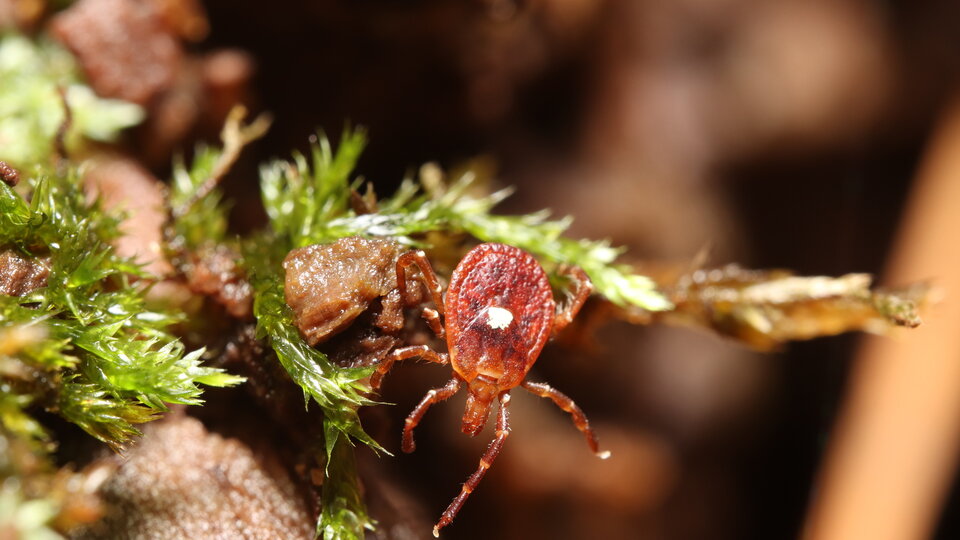
Adult females are larger than adult males and can be distinguished by a white dot on their back. Adult males are brown with black patterning.
Nymph and Larva
Nymphs are larva are similar in appearance. Nymphs are about the size of a poppy seed whereas larvae are slightly larger than a pinhead.
Eggs
Very small and laid in clusters of 3,000-8,000.
Photos
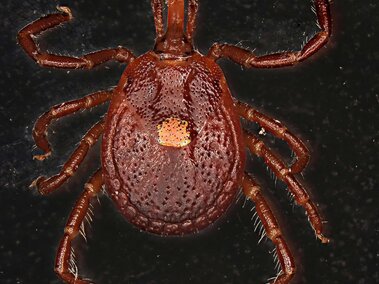
Credit: Susan Ellis, USDA APHIS PPQ, Bugwood.org
Adult female
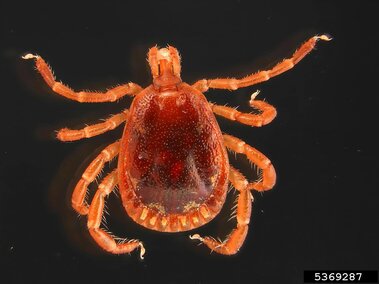
Credit: Susan Ellis, USDA APHIS PPQ, Bugwood.org
Adult male
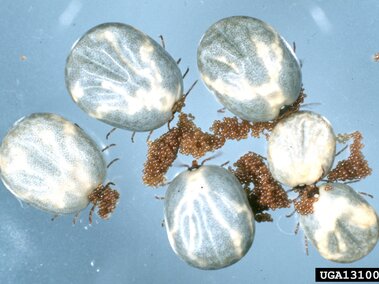
Credit: Jim Occi, BugPics, Bugwood.org
Engorged females and eggs
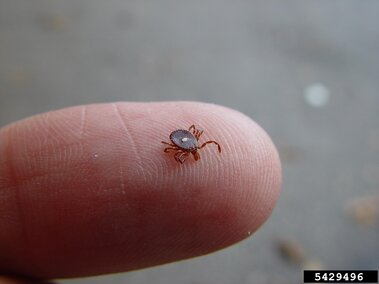
Credit: Gerald Holmes, Strawberry Center, Cal Poly San Luis Obispo, Bugwood.org
Adult female
Where Do They Live?
Lone star ticks live in grassy and wooded areas and are especially prevalent in areas where white-tailed deer are common. They can be found in the Eastern United States into the Midwest.
How Do They Spread?
As with other ticks, lone star ticks can be spread on migrating birds they use as hosts or during the transport of infested livestock and wildlife. They can also be spread via human activities by attaching to people, pets, clothing, and equipment.
How Do I Control Them?
Mechanical
It is best to prevent tick bites by taking some precautions before spending time outdoors during high tick-infestation times. Use EPA registered insect repellants containing DEET on exposed skin and clothing, following instructions carefully. Avoided heavily wooded or bushy areas and walk on trails.
Upon returning indoors, check yourself, pets, and gear for ticks and promptly remove them if necessary. Remove ticks with pointy tweezers, grasping near the tick's head at the surface of the skin and pulling straight out. Monitor bite site for several days afterward.
Cultural
Cattle and livestock owners should perform tick checks regularly, thoroughly inspecting animals for signs of tick infestation. Make sure pets are on a veterinarian approved tick preventative program.
Keep grasses on your property mowed, remove areas of full, high vegetation, and remove branch piles on your property promptly.
Insecticides
Please refer to the 2026 Guide for Weed, Disease and Insect Management in Nebraska.
What Do I Do if I Find Them?
If you find a lone star tick on your body or on your domestic animal, safely remove it as soon as possible. Dispose of a live tick by submersing it in alcohol, placing it in a sealed bag or container, tightly wrapping it in tape, or flushing it down the toilet.
Report tick sightings to the Tick, Tag, Go Program.
References and More Information
Colorado Department of Tick-Borne Disease Awareness Association
Northeast Regional Center for Excellence in Vector-Borne Diseases
Pennsylvania Department of Environmental Protection
U.S. Centers for Disease Control and Prevention
University of Wisconsin - Madison Department of Entomology